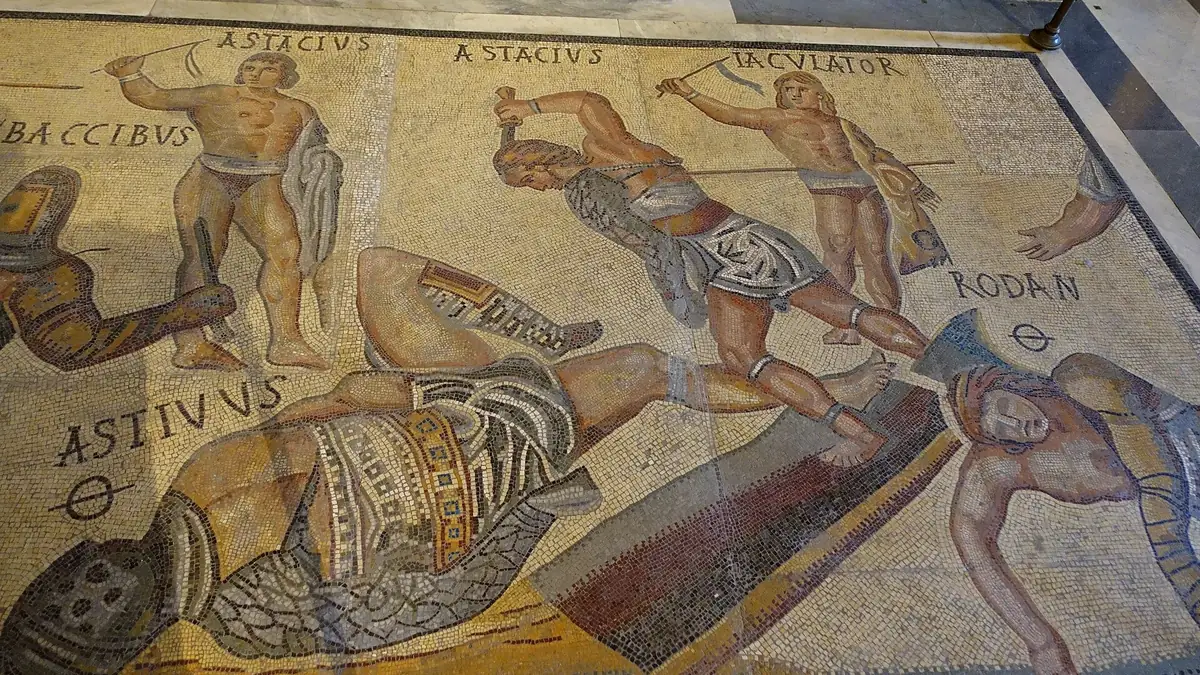
Were gladiators slaves? Many were, but not all. Most fighters came from slavery, yet some were free men who signed up for money, and the Colosseum staged the shows they fought in.
Key figures: volunteers: about half of all gladiators by the late Republic · Ludus Magnus built under Domitian, AD 81–96 · 100,000 sesterces offered by Tiberius to retired fighters
“Most were despised as slaves, schooled under harsh conditions, socially marginalized” — Wikipedia, Gladiator
Were gladiators slaves?
Most were. Wikipedia’s gladiator entry says most were despised as slaves, and that some were volunteers who risked their legal and social standing.
So “slave” is the usual answer and not the whole one. Prisoners taken in Rome’s wars were redistributed to mines, amphitheatres or the open market, and the film version of the story mostly stops there.
Who else became a gladiator besides slaves?
Condemned slaves and paid volunteers. Slaves sentenced to gladiator schools as punishment grew common under the Principate, and volunteers (auctorati) may have made up about half of all gladiators by the late Republic.
I find that half figure the most surprising thing on this page, and it comes with a “may”: the evidence is thin.
| Route into the arena | Who | What the source says |
|---|---|---|
| Prisoners of war | Captured soldiers | Redistributed to mines, amphitheatres or sale |
| Condemned slaves (damnati) | Slaves punished for crimes | Sent to gladiator schools or games |
| Volunteers (auctorati) | Free, paid | Possibly about half of all gladiators by the late Republic |
| The poor and non-citizens | Free enrollees | School offered a trade, food and housing “of sorts” |
Every cell above comes from Wikipedia’s Gladiator article.
Why would a free person volunteer to fight?
For the poor and for non-citizens, a gladiator school offered a trade, regular food, housing of sorts and a chance at fame and fortune. It was a bad bargain with a decent upside.
The money was real: gladiators customarily kept prize money and gifts, and Tiberius offered several retired fighters 100,000 sesterces each to come back. Volunteers also gave up standing, though. Honestly, I’d call that desperation as often as ambition.
Did gladiators ever get their freedom?
Some got out alive, which already counts. The same article notes that referees were usually retired gladiators, and that Tiberius lured retirees back with cash.
What I can’t give you is a sourced ceremony or a number of wins. The pages I opened don’t state one, so I won’t invent it.
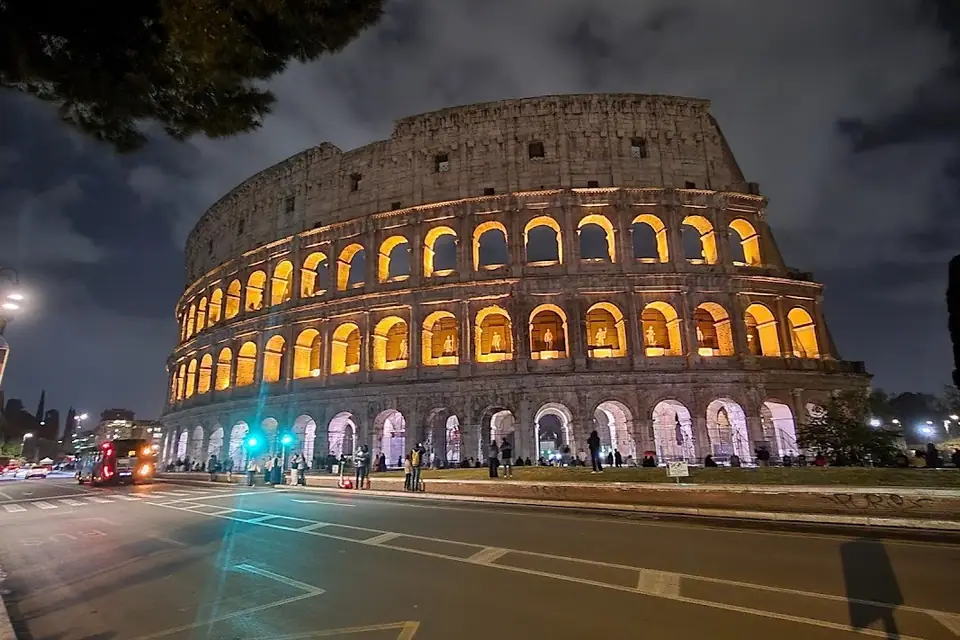
Did gladiators live in the Colosseum?
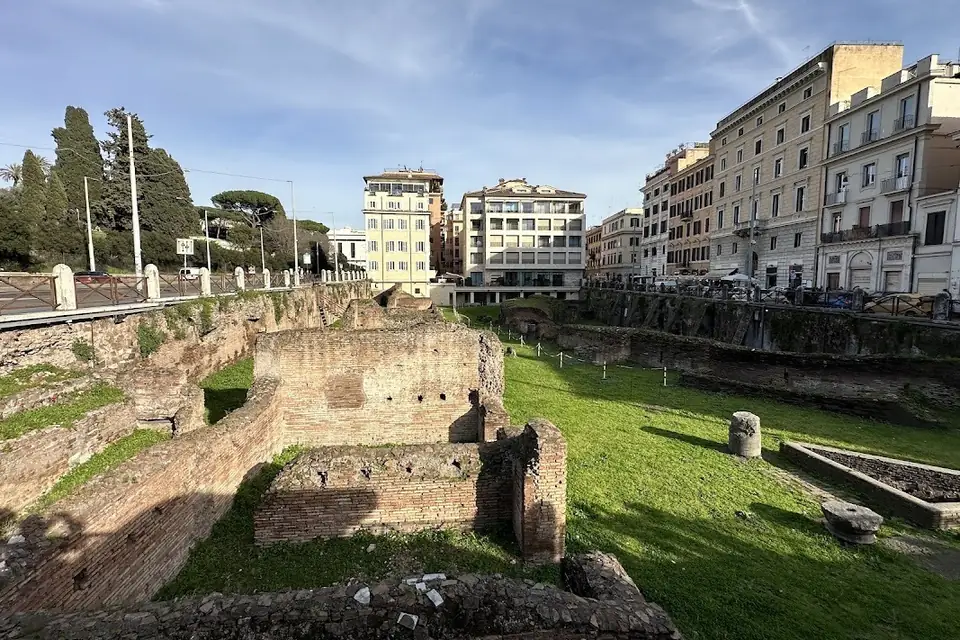
No school sat inside it. The largest, the Ludus Magnus, stood directly east of the Colosseum, built by Domitian in the late first century AD.
What you see on the ground today belongs to a Trajan-era rebuild that raised the floor about 1.5 metres. Say you climb out of Colosseo metro with two teenagers at 9:20 and want the school: walk east, because the school sat in the valley between the Esquiline and Caelian hills, not in the arena.
Map, starting points: Ludus Magnus ruins · Colosseo metro (Line B) · Piazza del Colosseo
Where can I see gladiator history at the Colosseum?
Start with the Colosseum Museum. A bay there presents the profession of the gladiator through graffiti, mosaics and reliefs.
I’d pair that with a Colosseum guided tour because the museum labels won’t talk back. If gladiators are your reason for going, an authorised reseller lists a gladiator floor access and Roman Forum tour from $87, about 2 hours. Compare it with the Colosseum night tour first.
Frequently asked questions
Who ran the gladiator schools?
A lanista was the manager of gladiators, the title Wikipedia gives for the trainer-dealers. Isidore of Seville, centuries later, derived the word from an Etruscan term for “executioner”.
Did gladiators keep their winnings?
Customarily yes: they kept prize money and any gifts. Some of it was substantial.
Were criminals still sent to fight?
An edict quoted in the article forbade criminals from being gladiators and sent them to the mines instead. That sits oddly beside the condemned slaves above, so the rule changed over time.
Was every show a gladiator fight?
The Park describes the building as used for hunts (venationes) and gladiatorial fights (munera). So gladiators shared the day with animal shows.
More gladiators: all Gladiators & the Games · types of gladiators · Ludus Magnus · did gladiators fight to the death?