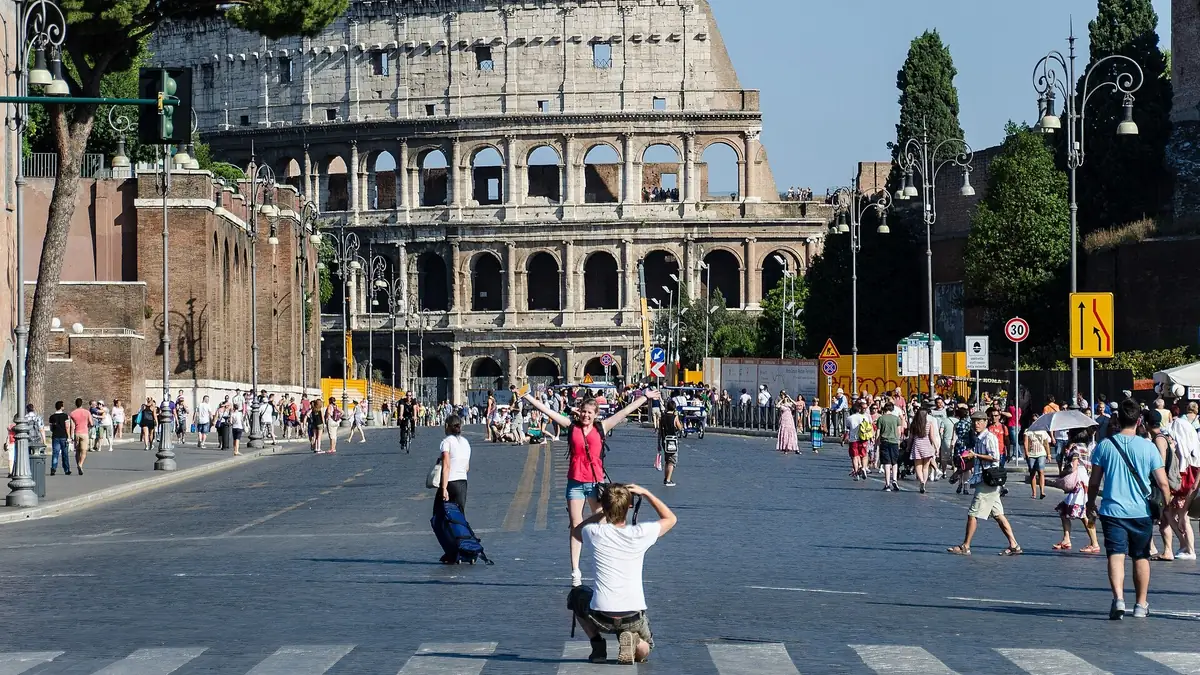
Colosseum history & facts start with a simple chain: a 1st-century amphitheatre built by the Flavian emperors, used for hunts and gladiator games, slowly abandoned, quarried, then rescued as a ruin. Thirteen guides on this site cover each link, and this page tells you which to read first.
At a glance: Built 1st century CE · Flavian dynasty · largest amphitheatre in the world · gladiator games banned 438
“It is the largest amphitheatre in the world.” Parco archeologico del Colosseo
What is the Colosseum, in one minute?
It’s the Flavian Amphitheatre, built in the 1st century CE at the order of the Flavian emperors, and it’s the largest amphitheatre in the world. The name Colosseum comes from a colossal statue that stood nearby.
Spectacles of huge popular appeal ran here until late antiquity: animal hunts, gladiator fights, even surprisingly complex stage machinery. Honestly the building was a show before anyone stepped on the sand.
Where should I start with Colosseum history and facts?
Start with the question you actually have. Each guide below answers one query in full, so you can read in order or jump.
| Question this page answers | Page |
|---|---|
| What is the Colosseum? | What Is the Colosseum? |
| When was it built? | When Was the Colosseum Built? |
| Who built it? | Who Built the Colosseum? |
| Why was it built? | Why Was the Colosseum Built? |
| What was it used for? | What Was the Colosseum Used For? |
| How old is it? | How Old Is the Colosseum? |
| What are the interesting facts? | Colosseum Facts: 30 Things Most Visitors Miss |
| Why is part of it missing? | Why Is the Colosseum Broken? |
| Why is it called the Colosseum? | Why Is It Called the Colosseum? |
| Colosseum or Coliseum? | Colosseum vs Coliseum |
| When did Romans stop using it? | When Was the Colosseum Last Used? |
| How has it been restored? | Colosseum Restoration |
| Is it a Wonder of the World? | Is the Colosseum a Wonder of the World? |
I’d read the first three, then wander. The “broken” page is the one people don’t expect to enjoy and then do.
How did the Colosseum go from arena to ruin?
Slowly. In 438 Valentinian III abolished the gladiatorial games, and the amphitheatre began a long, steady decline.
Through the Middle Ages and Renaissance it became a quarry, with part of it going into St. Peter’s Basilica, then shelter for animals, workshops and homes. The Romantic period fell for the ruin, and systematic excavation and restoration followed. The broken Colosseum guide unpacks what that did to the building.
Map, starting points: Colosseo metro (Line B) · Piazza del Colosseo
Why does the Colosseum matter beyond Rome?
It sits inside the Historic Centre of Rome, which UNESCO lists with the Colosseum named among its monuments of antiquity. The same listing cites the Colosseum’s restoration as one place where modern conservation principles were first tested.
So it’s not just old. It’s a teaching case for how you fix a ruin without faking it.
How does the history help you plan a visit?
Say you have one afternoon and a tired kid. Read the quarry story first and the missing stone makes sense, read the hunts story and the stage machinery stops being a footnote.
On the practical side, the Park’s ticket page puts the visit at 75 to 90 minutes depending on the ticket, with last access at 4.40 pm on that one. If you want the story told on site, browse the Colosseum tours.
Frequently asked questions
Is the Colosseum the same as the Flavian Amphitheatre?
Yes. The Park calls the building the Flavian Amphitheatre, more commonly known as the Colosseum.
Which century was the Colosseum built in?
The Park dates it to the 1st century CE, under the Flavian emperors. For exact dates and the timeline, read the build-date guide.
Are gladiator fights the only thing held there?
No. The Park also lists animal hunts, and today it hosts temporary exhibitions and modern spectacles.
Is the Colosseum still being restored?
The Park says it became a place of systematic excavation and restoration after the Romantic period. See the restoration guide for what has been done.
More Colosseum planning: home · Colosseum tours · Colosseum facts · how old is the Colosseum