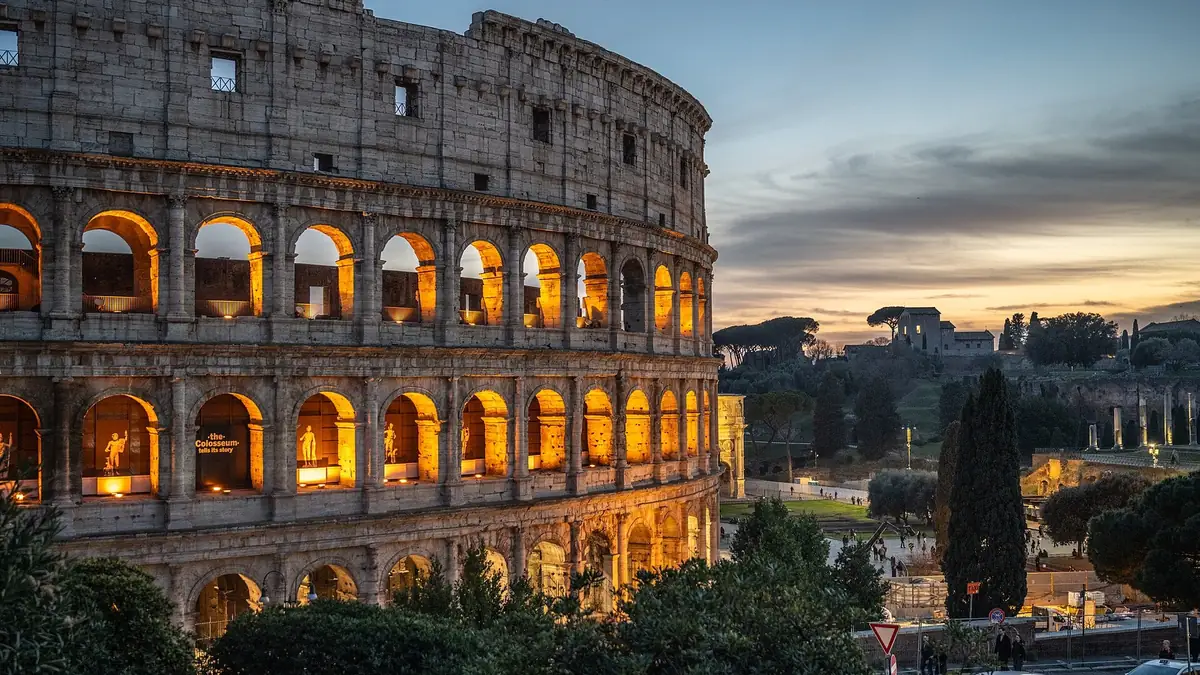
What happened in the Colosseum was a day of organized killing and show: beast hunts first, executions around midday, gladiator pairs in the afternoon. The Park says that until antiquity ended it staged spectacles of great popular appeal, such as animal hunts and gladiatorial games, and this is the order they came in.
Key figures: 9,000+ animals killed at the opening games · 100 days of inaugural games · 76 of 80 entrances for ordinary spectators · about 50,000 seats by modern estimate
What happened in the Colosseum on a day of games?
A day followed a set order: beast hunts (venationes) in the morning, executions at midday, the gladiator pairs in the afternoon. Acrobats and magicians filled the gaps between acts.
| Part of the day | What the crowd saw | Who was on the sand |
|---|---|---|
| Morning | Beast hunts | Hunters and wild animals |
| Midday | Executions, some staged as myth | Condemned prisoners |
| Afternoon | Gladiator duels, the main event | Paired gladiators |
| Intervals | Acrobatics, magic, comic bouts | Performers |
Order from Venatio and Gladiator; intervals.
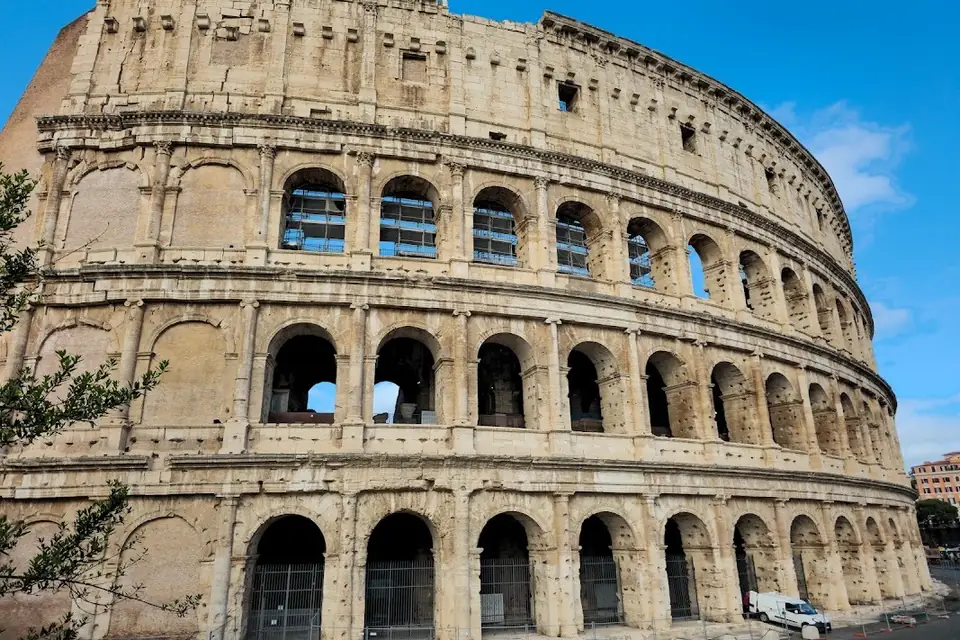
What happened in the Colosseum in the morning?
Mornings belonged to the hunts. Trained hunters faced wild animals brought from across the empire, and very few animals walked out.
Thousands could die in one day, and about 9,000 died at the opening games alone. Sets with movable trees and buildings made it theatre as much as slaughter. More on the beasts: animals in the Colosseum.
What happened in the Colosseum at midday?
During the lunch intervals the arena turned to executions of the condemned, often lower-status citizens, by fire, crucifixion or wild beasts. The Romans called this slot the ludi meridiani.
Some deaths were dressed up as re-enactments of Greek or Roman myths. Most of the crowd, gladiators included, apparently preferred the dignity of an even contest, which tells you something. Honestly the grimmest hour of the day.
What happened in the afternoon with the gladiators?
Afternoon was the headline act: pairs of gladiators, advertised ahead of time. For gamblers a printed programme (libellus) listed names, fighting types, match records and order of appearance.
The organizer or an honoured guest checked the weapons first, and the bouts were the highlight of the day. Whether they ended in death is its own question: did gladiators fight to the death?
Who watched, and what did they eat and drink?
Spectators held numbered pottery shards that sent them to a section and row, and streamed in through numbered gates. The sponsor could lay on an awning, food, drink, sweets and even door prizes.
Say you hold a shard for the top gallery, where the poor were put. You enter by one of the 76 public entrances, climb stairs numbered like the gate, and find your seat by row. Overhead, sailors from Misenum work the retractable awning that covered two thirds of the arena. The emperor, meanwhile, came in through the north entrance, his own.
Did the Colosseum stage night shows, and when did it all stop?
None of the sources I opened documents games by torchlight inside the building, so I wouldn’t promise them. Gladiatorial games ended in 438, and animal hunts ran until at least 523.
“In 438, with the abolition of the gladiatorial games by order of Valentinian III” — Parco archeologico del Colosseo
Where can I see this in the Colosseum today?
Go underground. The hypogeum is where gladiators and animals waited before contests, and the Park’s Full Experience Underground and Arena ticket opens it.
Visits last 75 to 90 minutes depending on the ticket. Domitian added that two-level maze of tunnels and cages later, so the opening games didn’t have it.
I’d pair it with the evening version, since the Park’s night visit tells the building through spectators and performers. Not sure which? Try which Colosseum night tour should I book.
Map, starting points: Colosseo metro (Line B) · Piazza del Colosseo · Ludus Magnus ruins
Frequently asked questions
Was the Colosseum really flooded for naval battles?
Ancient accounts of Titus’s AD 80 games describe the arena filled with water for swimming horses and bulls and a sea-battle re-enactment, though historians still debate how. Building the hypogeum under Domitian ended any flooding early on, as covered in naval battles in the Colosseum.
How many people could the Colosseum hold?
The Codex-Calendar of 354 gives 87,000, while modern estimates are around 50,000. I’d trust the lower figure.
Who was banned from watching?
Gravediggers, actors and former gladiators were barred altogether. The very top gallery was left to the poor, slaves and women.
How did gladiators reach the arena?
A tunnel linked the Ludus Magnus barracks to the Colosseum, to give gladiators easy access. Read more about the Ludus Magnus gladiator school.
More on the games: Gladiators & the Games hub · animals in the Colosseum · did gladiators fight to the death · Colosseum night tour guide