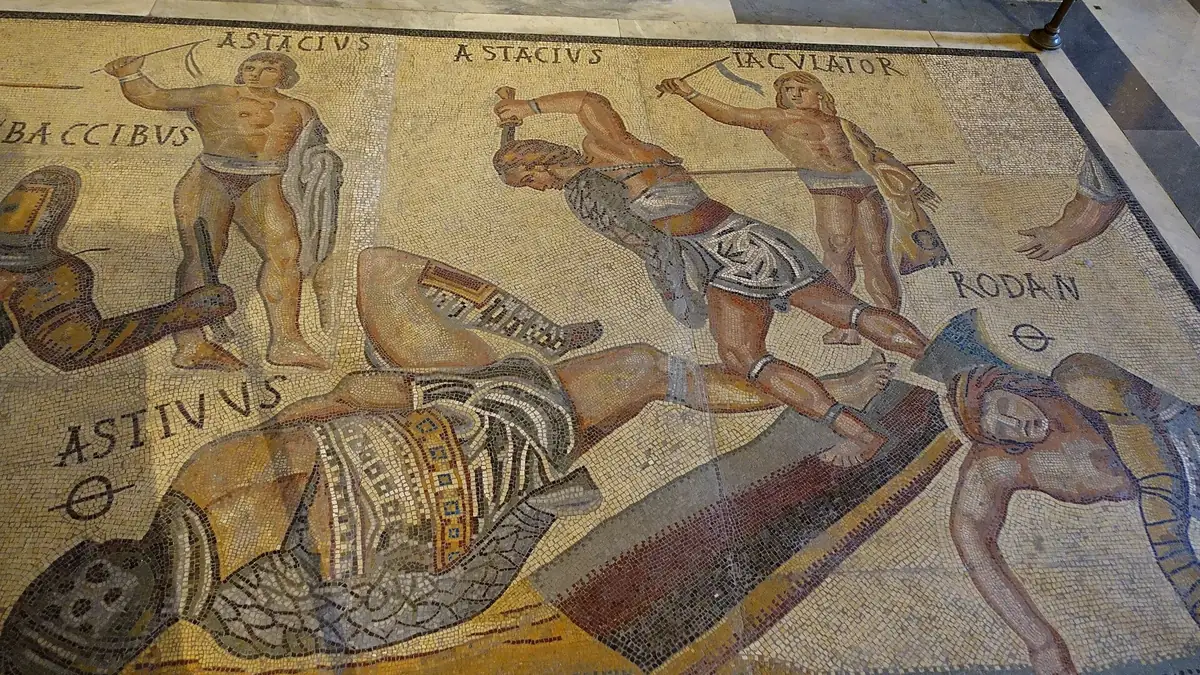
Female gladiators were real, but rare: Roman sources show them from the 60s AD as “exotic markers of exceptionally lavish spectacle” until an emperor banned them in AD 200. The evidence is thin and scattered, and I think that’s the honest starting point.
Key dates: AD 66 Nero’s games · AD 89 Domitian’s “Amazons” · 2nd-century Halicarnassus relief · AD 200 ban
The Colosseum Museum “presents the profession of the gladiator and the subjects of the venationes (animal hunts).” Parco archeologico del Colosseo
Were there really female gladiators?
Yes, but very few. They appear around the end of the Republic, and their existence is poorly documented.
The best clue is a relief from Halicarnassus. It shows two women named Amazon and Achillia, and their match ended in a draw. Everything else is a line in a satirist or a historian. Juvenal gives us Mevia, hunting boars. Domitian staged a fight between women billed as “Amazons” in 89 AD. Not a lot, honestly, for 200 years of games.
| Evidence | Date | What it says |
|---|---|---|
| Nero’s games | 66 AD | Ethiopian women, men and children fought |
| Domitian’s munus | 89 AD | A battle between women described as “Amazons” |
| Halicarnassus relief | 2nd century AD | Amazon and Achillia, a draw |
| Ostia inscription | 2nd century AD | A local grandee praised as first to “arm women” |
| Severus’s ban | 200 AD | Female gladiators prohibited |
What was a female gladiator called?
Today she’s a gladiatrix, plural gladiatrices. The word is late: the earliest known use is post-Classical, in a 4th-century gloss of Juvenal.
So the Romans never had a tidy label. Sources just say women.
Who were the famous female gladiators?
Almost none by name. Amazon and Achillia are the only pair I’d call truly named, and we know them from one stone, not from a biography.
Mevia is a satirist’s figure, not a record. If a page hands you a life story for a gladiatrix, ask where it comes from, because I couldn’t find one in anything I opened.
Did women fight in the Colosseum itself?
I can’t prove it from the sources I opened, and I’d distrust anyone who says they can. What’s documented is that Titus used female gladiators, and Cassius Dio takes care to say they were of acceptably low class.
The Halicarnassus relief is in what is now Turkey, so it isn’t Colosseum evidence at all. Rome’s women fought in Rome’s games; the exact arena is a gap.
Why did Rome ban female gladiators?
Septimius Severus banned the use of female gladiators in 200 AD, probably after the crowd jeered his attempt at dignified female athletics. Some Romans saw women in the arena as a sign of corrupted morals.
“Probably” is the word to keep. The sources infer the motive; they don’t record it.
Can you see anything about female gladiators at the Colosseum?
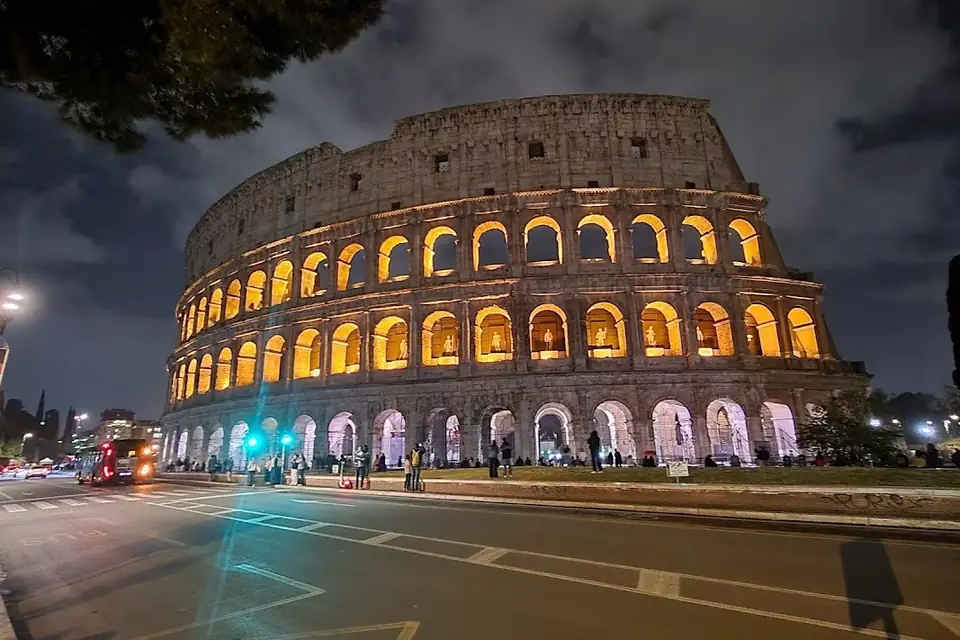
Not a dedicated display that I could confirm. The Colosseum Museum covers the gladiator’s profession and the animal hunts through graffiti, mosaics and reliefs, which is the right context to bring your own questions to.
Say you book the underground ticket for a Tuesday and walk in at your slot. The Full Experience Underground and Arena gives you 90 minutes inside, the museum included, so you’d stand at the case and ask what’s missing. That absence is part of the story. If you’d like someone to answer back, an authorised reseller lists a guided Colosseum, Forum and Palatine tour from $53, though ask the guide before booking whether women gladiators come up.
Frequently asked questions
Did female gladiators fight to the death?
The sources I opened don’t say. The Halicarnassus relief records a draw, so at least one famous match ended without a winner.
Did female gladiators fight bare-chested?
Juvenal describes Mevia hunting boars with her breasts exposed. That is one satirist’s image, so treat it as colour, not as standard dress.
Were female gladiators trained like the men?
Probably, yes. Female gladiators probably submitted to the same regulations and training as their male counterparts, though that is a scholarly inference.
Where can I read about the wider games?
Start with the hub on gladiators and the games. For the fighters themselves, try the types of gladiators or whether they were slaves.
More on the games: Gladiators & the Games · famous gladiators · Colosseum guided tour options · home