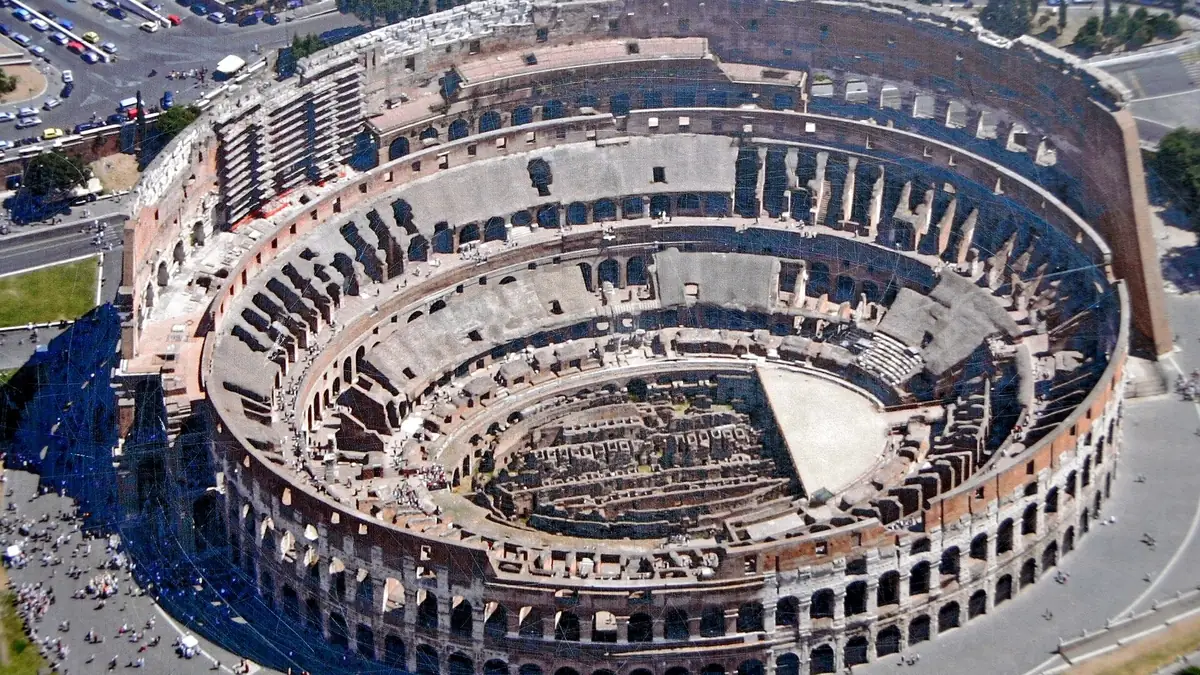
Colosseum naval battles are reported by ancient writers: at the opening in 80 AD the emperor Titus is said to have staged a naumachia, a mock sea fight, inside the new amphitheater. Nobody has found the plumbing, so the scale is the argument.
At a glance: Reported in 80 AD under Titus · another c. 85 AD under Domitian · arena 79.35 m by 47.20 m · Full Experience Underground and Arena: 90 min
Was the Colosseum used for naval battles?
Yes, according to ancient writers. Dio Cassius says Titus gave two naumachiae for the 80 AD inauguration, one in the Augustan basin and one in the new amphitheater.
Martial’s Book of Spectacles describes the quick change from water show to land show, and Suetonius places a naumachia under Domitian in the Colosseum too. Three writers, no engineering manual. I’d call it likely but thin.
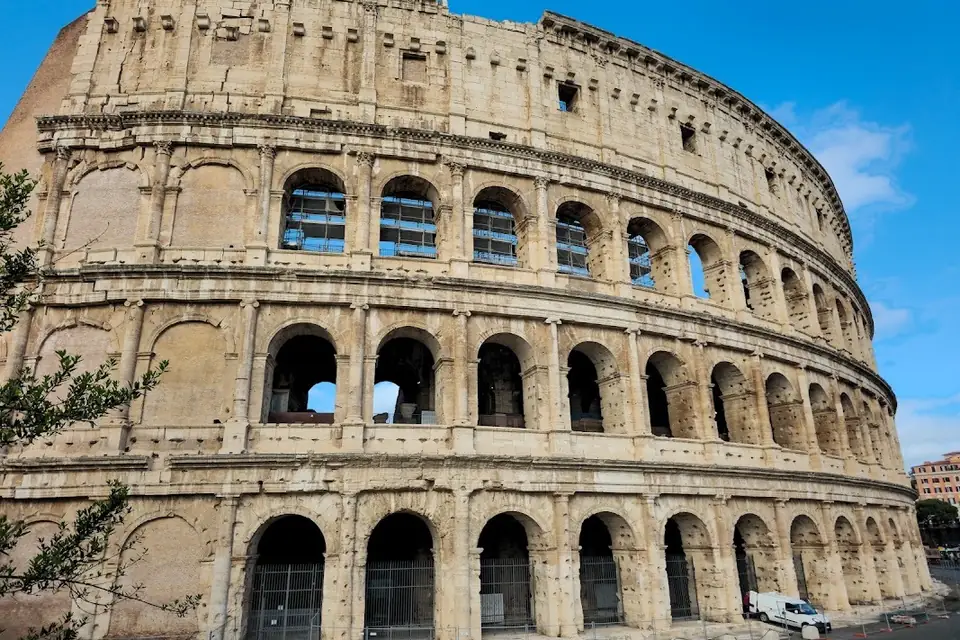
What did a Colosseum naumachia look like?
Smaller than the legend. The arena measured only 79.35 by 47.20 meters, nothing like Augustus’s basin, so you’re picturing crews on several warship reproductions, maybe life-size, more brawl than manoeuvre.
Stage-prop ships, some rigged to fake a wreck, were also used. Wikipedia’s naumachia article doubts the ships truly floated and sailed, and honestly so do I.
| Naumachia | Date | Place | Scale reported |
|---|---|---|---|
| Julius Caesar | 46 BC | Basin near the Tiber | 2,000 combatants, 4,000 rowers |
| Augustus | 2 BC | Basin across the Tiber | 30 ships, 3,000 men |
| Claudius | 52 AD | Fucine Lake | 100 ships, 19,000 combatants |
| Titus | 80 AD | Colosseum and Augustan basin | Several thousand men (Augustan basin) |
| Domitian | c. 85 AD | Colosseum | Not recorded |
Figures from Wikipedia’s Naumachia article.
How did they flood the Colosseum?
Nobody knows. The surviving sources describe no mechanism and the basement was later altered, and the Colosseum entry adds that there is no physical evidence of naumachiae at the remains.
The best guess is a connection to a nearby aqueduct. Verona and Mérida amphitheaters show real basins, and Mérida’s is only 1.5 meters deep, so a shallow layer is the safest bet. Those AI-summary figures on depth and gallons? Unsourced, and I’d ignore them.
When and why did the flooding stop?
Probably around 85 AD. Domitian completed the network of rooms under the arena, which precluded such spectacles, and Wikipedia’s Colosseum entry says the hypogeum put an end to flooding early in the building’s existence.
So the show lived for a few years. Later naval spectacles moved to dedicated basins, like the one Trajan opened in 109.
Can you see where it happened today?
You can see the hypogeum, which is the evidence for the end of the story. Two levels of tunnels and cages, with eighty shafts to lift animals and scenery into the arena.
Say you walk in at 9:20 with two kids who’ve seen a video claiming the Romans “flooded everything.” Standing on the walkway, you can point down at the stone corridors and say: this replaced the water. That’s the tour I’d book.
The official Full Experience Underground and Arena ticket allows 90 minutes inside, opens 30 days ahead and gives underground access based on availability. An authorised reseller sells the 3-hour All-Access Colosseum Underground & Ancient Rome Tour from $131 if you want a guide. More on access in our colosseum underground tour guide.
“Purchasable online starting from 30 DAYS before the date of the visit.” Parco archeologico del Colosseo
Map, starting points: Colosseo metro (Line B) · Colosseo-Fori Imperiali (Line C) · Piazza del Colosseo
Frequently asked questions
How long did it take to fill the Colosseum with water?
No source records it. The ancient accounts stress only that the change between water and land shows was quick.
Who fought in the naval battles?
In the earlier naumachiae the combatants were prisoners of war or men condemned to death. For the Colosseum shows, Wikipedia’s account names only “crews,” so I wouldn’t say more.
Is it true the Colosseum flooded by accident in 1874?
I couldn’t confirm that from any source I opened, so I’m leaving it out. Treat it as unverified.
How do I get to the Colosseum?
Take Metro Line B to Colosseo or Line C to Colosseo-Fori Imperiali. Both are named for the Colosseum.
More on the games: Gladiators & the Games hub · Did gladiators fight to the death? · What happened on a day at the games · Colosseum underground tour