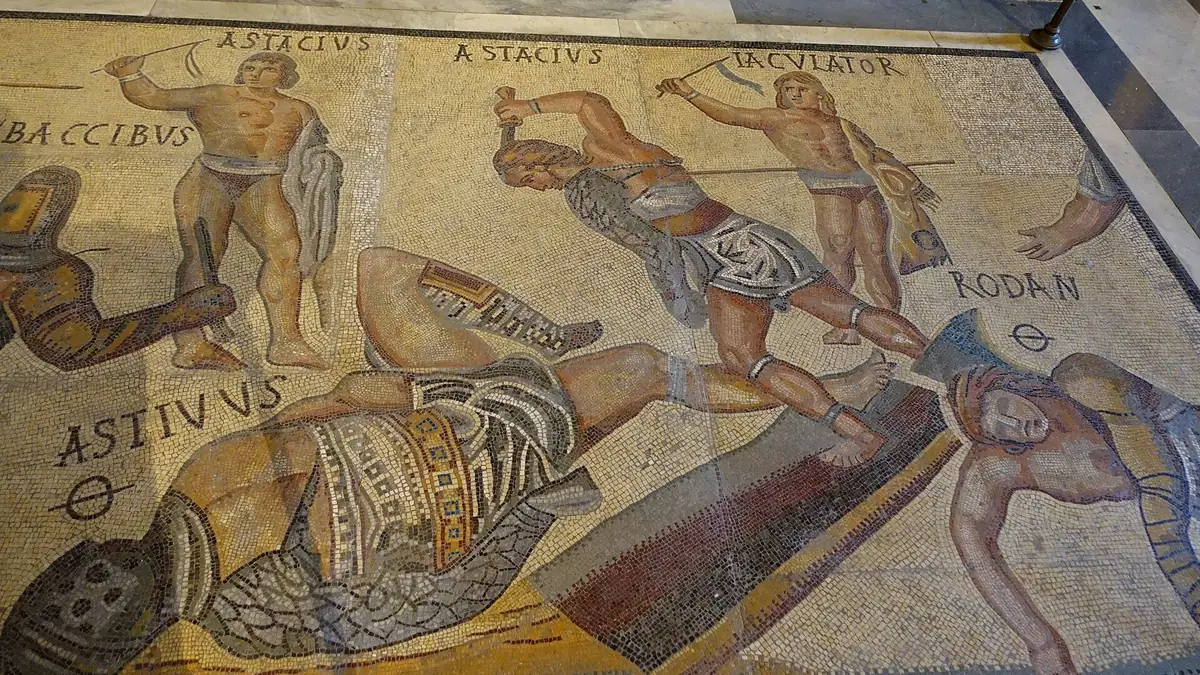
Did gladiators fight to the death? Sometimes, but not as a rule: most matches had a referee, and a beaten fighter could appeal for mercy. The film version, two men and one corpse every time, blends together trained duels, executions and beast hunts that shared one arena.
At a glance: Games ended 438 · 2 referees per match, a summa rudis and an assistant · death payout up to ~50x the lease price
Did gladiators really fight to the death?
No, not every bout, and not by default. Trained pairs fought under rules, and a defeated man could raise a finger to appeal to the referee and the sponsor.
Early on it was harsher: in the earliest munera, death was considered a righteous penalty for defeat. Rome’s habits changed across centuries, so “the Roman rule” never existed. I’d treat any page that states one number or one rule for the whole empire with suspicion.
Who made the rules and refereed the fights?
A senior referee called the summa rudis and an assistant ran most bouts, carrying long staffs to caution or separate opponents. They were usually retired gladiators, and they could stop a fight entirely or pause it for a rest.
Above them sat the editor, the sponsor paying for the show. That’s the person who decided about mercy, usually by reading the crowd.
Why were gladiators rarely killed?
Money, mostly. A gladiator was leased from a trainer, and the contract could include compensation for unexpected deaths, reportedly some fifty times the lease price.
Skill mattered too. Among connoisseurs, bravado and technique were prized over hacking and bloodshed, and some careers rested on bloodless wins. One Nero show, the source says, had no deaths at all, not even among condemned prisoners.
What did missio and sine missione mean?
Missio was the sparing of a beaten fighter’s life. Matches advertised as sine missione, usually read as “without reprieve”, were billed as exceptions, which suggests mercy was the norm.
About the thumbs: the page I rely on describes a raised finger and the crowd’s response, and nothing about thumbs. I’d file the movie gesture under “unproven” and not repeat it.
| What happened | Who | Deadly? |
|---|---|---|
| Trained pair, with referee | Gladiators | Could end in death, mercy possible |
| Early munera | Defeated fighter | Death seen as a fair penalty |
| Imperial sine missione match | Defeated fighter | Advertised “without reprieve” |
| Midday ludi meridiani | Condemned noxii | Usually executions |
| Commodus performing | The emperor | Mostly wooden swords, he always won |
Where did gladiators fight in the Colosseum?
In the arena of the Flavian Amphitheatre, which staged animal hunts and gladiatorial games until the end of the ancient period. The Park describes the night visit’s story as hunts (venationes) and gladiator fights (munera).
Say you stand at the rail with two kids and a cooling coffee. Below you, the underground walls are where the machinery sat, and the question “who died here?” has a messier answer than one fight. For numbers, read how many people died in the Colosseum. For the grimmer side, there is the Colosseum’s dark history.
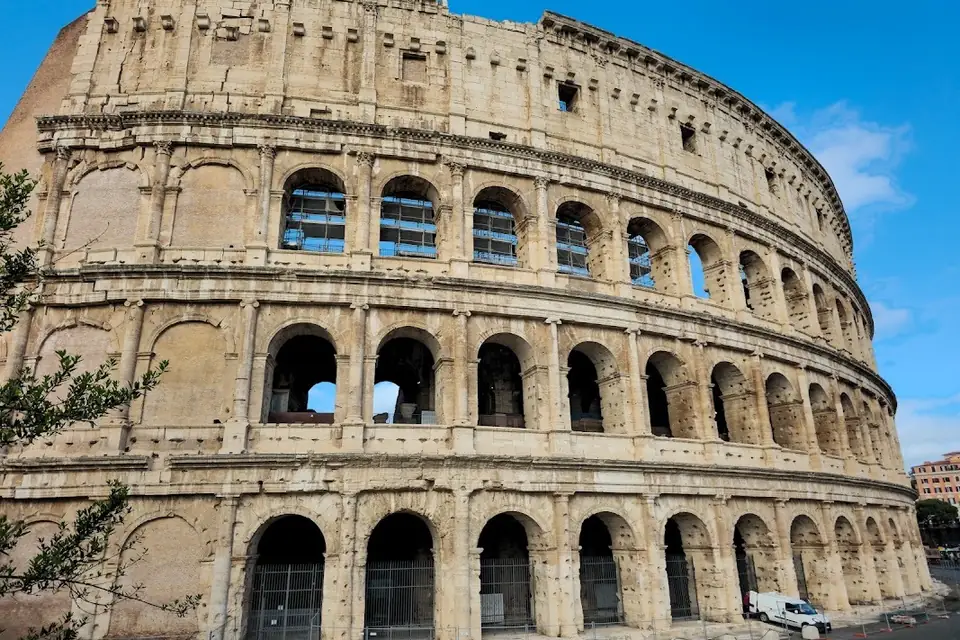
“It is the largest amphitheatre in the world.” Parco archeologico del Colosseo
Map, starting points: Colosseo metro (Line B) · Colosseo-Fori Imperiali (Line C) · Piazza del Colosseo
To see where the sand was, plan the Colosseum arena floor. An authorised reseller sells a 2.5-hour arena floor, Palatine and Forum guided tour from $43. Metro Line B to Colosseo or Line C to Colosseo-Fori Imperiali will drop you at the gate.
Frequently asked questions
Did gladiators fight to the death in the Colosseum specifically?
The Colosseum hosted gladiatorial games until the ancient period ended, but the same rules and referees applied there as elsewhere. Death was possible, never guaranteed.
Could the crowd decide a gladiator’s fate?
The sponsor, the editor, made the call, and his decision usually rested on the crowd’s response. A loser signalled by raising a finger.
Were executions part of the games?
Yes, the midday ludi meridiani usually involved executions of condemned people called noxii. That’s a separate event from a duel between trained gladiators.
Did gladiators ever win their freedom?
Yes, the greatest reward for someone condemned to the gladiator school was manumission, symbolised by the gift of a wooden rudis. The sponsor awarded it.
More gladiators: all gladiators and the games · types of gladiators · were gladiators slaves? · Colosseum night tour guide