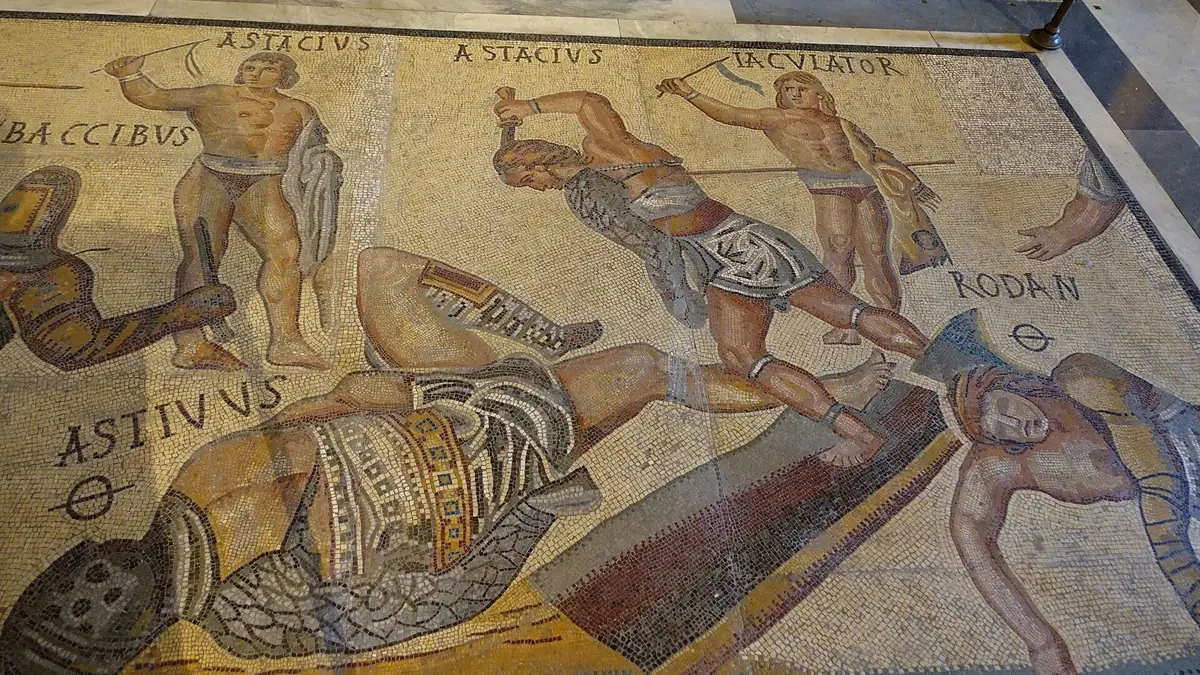
The types of gladiators were fighting classes, each defined by its own weapons and armour, and different types specialised in specific weapons and techniques. Four names matter most: murmillo, thraex, retiarius and secutor. Learn those and the rest falls into place.
At a glance: gladius 64–81 cm · Thracian sica c. 34 cm · gladiatorial games abolished in 438
“presents the profession of the gladiator and the subjects of the venationes” Parco archeologico del Colosseo, Colosseum Museum
What were the main types of gladiators?
Six classes show up again and again: murmillo, thraex, retiarius, secutor, hoplomachus and provocator. Each came with its own kit and, just as important, its own usual opponent.
Dozens of other names exist, andabata and arbelas among them, but some are barely attested. The andabata is extremely rare in classical sources, and the arbelas turns up in a single dream book. I’d ignore those until you’ve got the big six straight.
| Type | Gear | Usual opponent |
|---|---|---|
| Murmillo | Fish-crested helmet, tall oblong shield, gladius | Thraex, occasionally hoplomachus |
| Thraex | Griffin-crested helmet, small shield, two greaves, curved sica | Murmillo or hoplomachus |
| Retiarius | Trident, net, no helmet | Secutor, sometimes murmillo |
| Secutor | Smooth round helmet, tall shield, gladius | Retiarius |
| Hoplomachus | Spear, small round shield, gladius | Murmillo or thraex |
| Provocator | Breastplate, tall shield, gladius | Other provocatores |
Every cell comes from the list of Roman gladiator types.
What did a murmillo fight with?
A murmillo was the heavy one: a helmet with a fish on the crest, an arm guard, a tall legionary-style shield and a gladius. He usually faced a thraex.
That gladius ran 64 to 81 cm, so don’t picture a dagger. Think wall of shield, short steady steps.
How did the retiarius and secutor fight?
The retiarius carried a trident and a net, styled on a fisherman’s gear, and wore no helmet at all. The secutor, “pursuer”, was built to chase him down.
Same armour as a murmillo, except the helmet: round, smooth, with two small eye-holes, so the net found nothing to grip and the prongs couldn’t reach the face. It’s my favourite bit of design in the whole system, an armour class made as an answer to one opponent.
What made the thraex different?
The thraex fought with a small shield, two thigh-length greaves and a curved sword about 34 cm long, under a helmet crested with a griffin. Thraeces commonly fought murmillones or hoplomachi.
They were introduced as replacements for the Gaulish type once Gaul made peace with Rome. Light shield, long legs covered, a blade that curves: all of it says “go around, not through”.
Why were gladiators matched in pairs?
Fighters were usually set against opponents with different but more or less equivalent equipment, for a fair and balanced contest. Most also came from the same school, or ludus.
Say you’re in the Colosseum Museum with a ten-year-old who points at a mosaic and asks who’s winning. Net and trident, no helmet: the retiarius. Smooth helmet, big shield: the secutor. Heavy against fast, which is the whole point… and why a provocator, protected by a breastplate, was paired only against other provocatores. For the rules of the fight itself, read did gladiators fight to the death.
Where can you see gladiator history at the Colosseum?
The Colosseum Museum has a bay on the gladiator’s profession, with graffiti, mosaics and reliefs, and the building itself staged gladiatorial games until the end of the ancient period. To stand where they went in, see the colosseum gladiator gate page.
The Park’s evening visit also tells the story of hunts and gladiatorial fights, though it runs only in summer; the Colosseum night tour guide covers the options. Kit details are on the weapons and armour page.
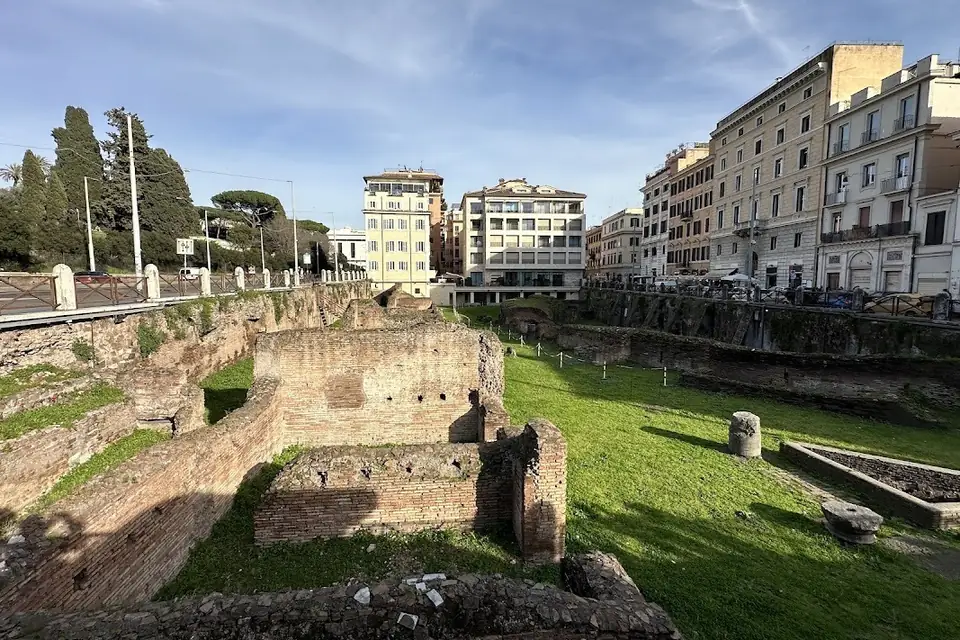
Map, starting points: Colosseo metro (Line B) · Colosseo-Fori Imperiali (Line C) · Piazza del Colosseo
Frequently asked questions
Did female gladiators have their own type?
No, “gladiatrix” simply meant a female gladiator of any type, and they were very rare and poorly documented. Septimius Severus banned them by AD 200.
What was a bestiarius?
A bestiarius was a beast-fighter, a different job from the sword-and-shield classes. The list of gladiator types counts him among fighters tied to the spectacles who were not strictly gladiators.
What was a rudiarius?
A gladiator who earned his freedom received a wooden sword, the rudis, and if he stayed on to fight he was called a rudiarius. They were popular with the public because they were experienced.
Did any gladiator types disappear?
Yes. The Samnite vanished in the early imperial period, and the Gallus seems to have been replaced by, or turned into, the murmillo.
More gladiators: Gladiators & the Games · famous gladiators · gladiator weapons and armour · Ludus Magnus