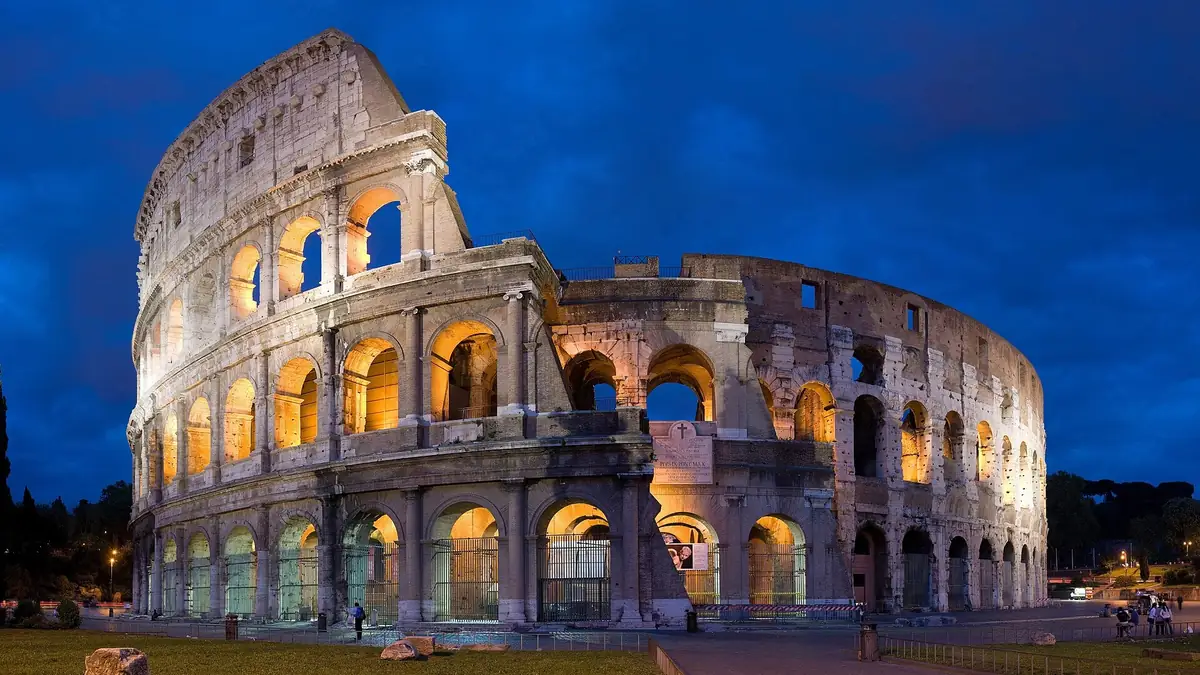
The colosseum dark history is real, but it’s narrower than the legends: public executions, mass animal hunts and gladiator fights staged for a crowd of up to 80,000. The curses, the flooded arena and the martyrs are another matter, and the sources split them from the proven stuff.
At a glance: 9,000+ animals killed at the opening games · 11,000 animals and 10,000 gladiators in Trajan’s 123 days · 80 shafts under the arena floor · 50,000 to 80,000 spectators
“The building was, and still remains today, a spectacle in itself.” Parco archeologico del Colosseo
What is the dark history of the Colosseum?
It was a venue for bloodsport: animal hunts and gladiatorial games that lasted until the end of the ancient period. The games were an act of power, too, since the munera were given by private individuals as a show of family prestige.
Everything below is sorted by how well it holds up. Some of it is grim and well documented. Some is repeated because it makes a better podcast.
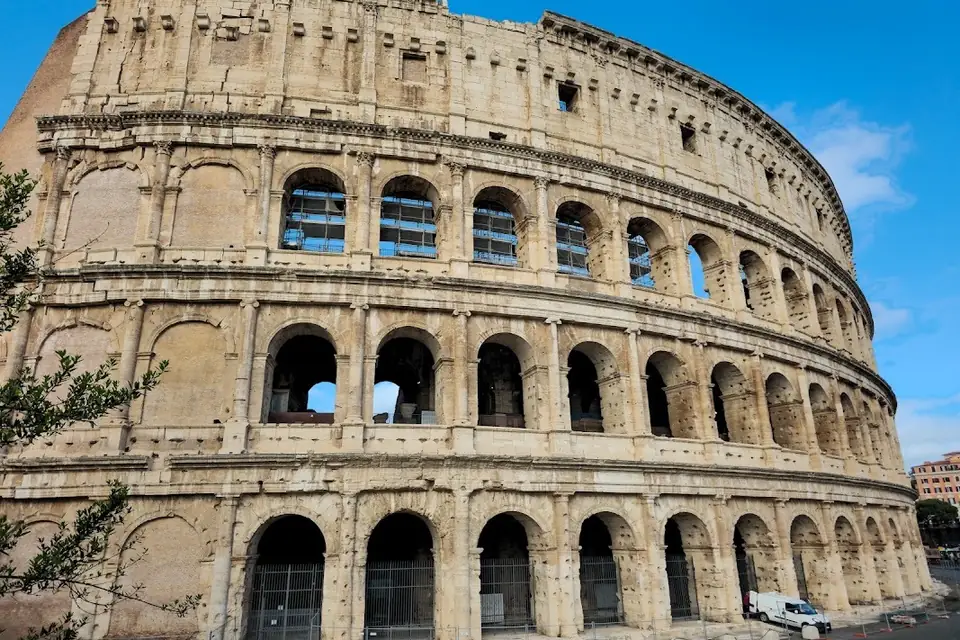
Were people really executed in the Colosseum?
Yes. Condemned criminals were put to death after the animal hunts, by burning, crucifixion or being left alone with wild animals (ad bestias).
Some killings were staged as theatre. Martial describes a man dressed as Orpheus ripped apart by a bear, and the arena’s forest sets were used for mythological executions. I find that detail worse than the lions. Cruelty with a script.
How many animals died in the Colosseum?
Nobody has a full count. The two numbers that survive are over 9,000 wild animals at the inaugural games, per Dio Cassius, and 11,000 animals plus 10,000 gladiators across Trajan’s 123 days, a figure the source says Trajan “is said” to have staged.
Treat both as ancient claims, not a ledger. For the species and the hunts in detail, see animals in the Colosseum.
Did Christians die in the Colosseum?
Probably some, but there’s no proof. No conclusive evidence shows Christians were executed in the Colosseum, though it’s plausible some were.
The tradition is younger than people assume. Pope Benedict XIV consecrated it in 1749, yet the same source finds no evidence anyone suggested it before the 16th century. Faith, yes. Record, no.
What was hidden beneath the Colosseum arena?
A machine for surprise. The hypogeum, ordered by Domitian, was a two-level network of tunnels and cages where fighters and animals waited, with eighty vertical shafts to the sand and lifts to raise caged beasts.
Say you stand at the rim and look down into those open walls. Every animal in that morning’s hunt waited in the dark under your feet, then rose through a shaft into noise and light. That’s the horror and the engineering at once.
| Spectacle | What the sources say | Source |
|---|---|---|
| Animal hunts (venationes) | Morning event; exotic beasts released from below | Venatio |
| Executions | After the hunts; burning, crucifixion, ad bestias | Venatio |
| Gladiator duels (munera) | Afternoon main event; private sponsors | Venatio · Colosseum |
| Mock sea battles | Briefly, early on; no physical evidence in the ruins | Colosseum |
Can you see the dark side of the Colosseum today?
Yes, from the underground. The Park’s Full Experience Underground and Arena ticket covers the underground and the arena, and its night route in summer tells the hunt and gladiator story from inside.
My pick is the underground in the morning, before the crowds make the tunnels feel like a queue. See the colosseum underground night tour for the after-dark version. If you want a story-led walk outside, an authorised reseller lists a Colosseum and Ancient Dark History walking tour from $44 for 1.5 hours.
Map, starting points: Colosseo metro (Line B) · Piazza del Colosseo
Frequently asked questions
Why was the Colosseum so brutal?
The shows were meant to impress. Private sponsors gave them as demonstrations of power and family prestige, so spectacle often beat mercy.
What did the Colosseum smell like?
I can’t tell you, because none of the sources I opened describe it. Anyone giving you a confident answer is guessing.
When did the Colosseum games end?
Valentinian III abolished the gladiatorial games in 438. Another source says Honorius banned them in 399 and 404, with fights last mentioned around 435.
Was the Colosseum really flooded for sea battles?
Ancient accounts say it could be flooded, but there is no physical evidence of naval battles in the remains. Domitian’s underground structure ended any flooding early on, which fits that silence.
More on the games: Gladiators & the Games hub · how many people died in the Colosseum · did gladiators fight to the death · Colosseum night tour