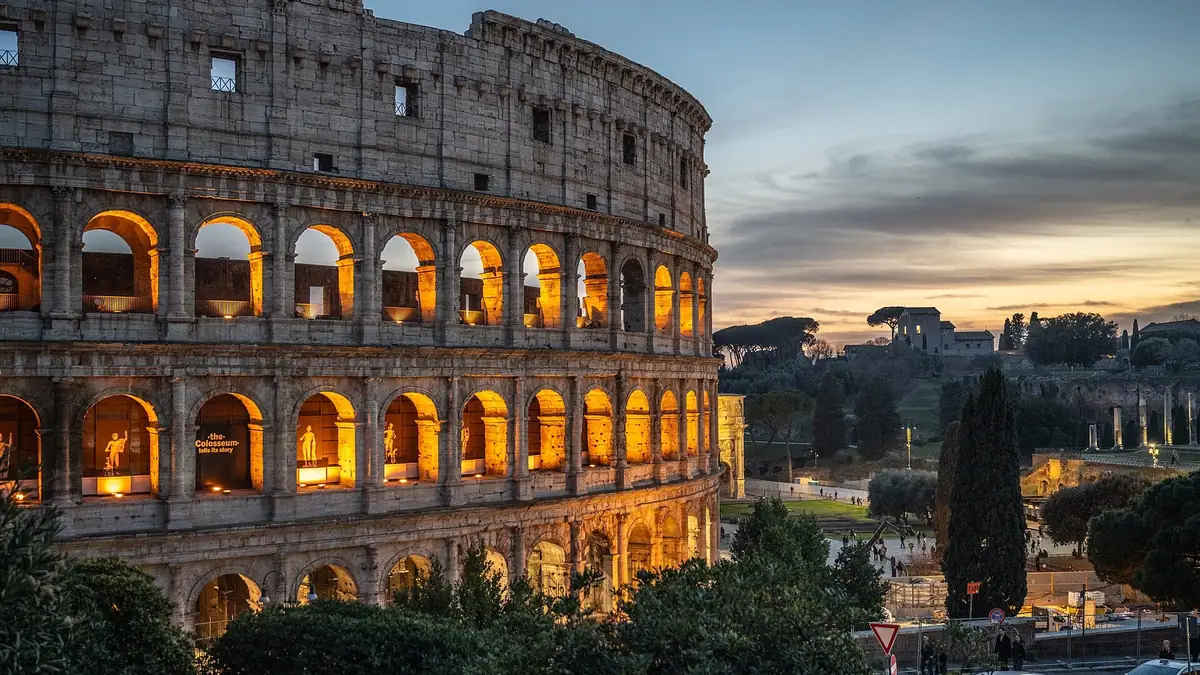
The Colosseum arena is the oval floor in the middle of the building where hunts, gladiator fights and staged spectacles took place, and the word itself is just Latin for sand. It measured 83 by 48 meters, and almost none of the original floor is left.
Key figures: 83 x 48 m floor · 80 vertical shafts below · 20 minutes on the floor with an Only Arena ticket · games abolished in 438
“The building was, and still remains today, a spectacle in itself.” Parco archeologico del Colosseo
What does “arena” mean?
It means sand. The Latin word is harena or arena, so the floor was named after what covered it.
The Colosseum is the amphitheatre, the building. Amphitheatrum means “theatre all around”, a ring of seats, not a half circle like a theatre. The arena is just its middle.
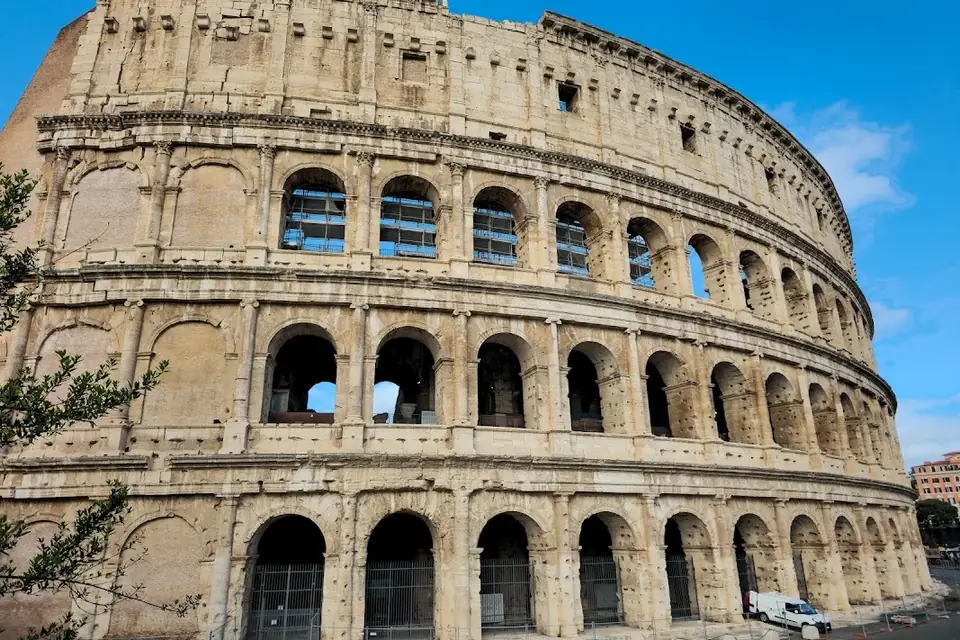
What was the Colosseum arena floor made of?
It was a wooden floor covered with sand. Beneath it ran a two-level network of tunnels and cages.
Underneath sat the hypogeum, which the same source says Domitian ordered built after the opening. So the wood was a lid on a machine. Boards, sand, then a whole hidden stage crew.
How big was the Colosseum arena?
The arena was 83 meters by 48 meters, or 272 by 157 feet. That’s the floor alone, not the whole building.
An oval, longer one way, and the Romans measured it as 280 by 163 Roman feet. Big, then. The whole building’s numbers live on the dimensions page.
How did the trapdoors and the underground work?
Eighty vertical shafts let caged animals and concealed scenery pop up into the arena at once. Larger hinged platforms, the hegmata, took elephants and similar.
Elevators and pulleys did the lifting, the Park describes surprisingly complex stage machinery. Honestly, that machinery is the best argument for going below: see how the hypogeum worked. Flooding the arena for naval battles ended early, and there’s no physical evidence of such battles here.
Where did gladiators fight before the Colosseum?
In temporary wooden amphitheatres. Records place them in the Forum Romanum from the second century BC, well before any stone one.
Pompeii’s amphitheatre, securely dated shortly after 70 BC, is the oldest well-researched stone example. The Colosseum came much later, as the giant.
What survives of the original arena floor?
Little of the original floor remains, and the underground below it is what you can still read clearly. What visitors stand on now isn’t ancient, and I couldn’t confirm the new floor’s materials or date from a source I opened, so I won’t guess.
The games stopped for good in the fifth century: Valentinian III abolished them in 438. After that came the quarrying and the reuse.
Can you stand on the Colosseum arena today?
Yes, with an arena ticket. The standard Colosseum, Roman Forum and Palatine ticket covers the first and second order without the arena.
| Ticket | Arena | Time inside | Last access |
|---|---|---|---|
| Colosseum, Roman Forum and Palatine | No | 75 minutes | Not stated on the page |
| Only Arena | Floor only | 20 minutes | 6.00 pm |
| Full Experience Arena | Yes | 90 minutes | 3.00 pm |
| Full Experience Underground and Arena | Yes, plus underground | Valid 2 consecutive days | 4.40 pm |
Say you’ve booked Only Arena for 5.40 pm, the last entry being 6.00. You come in at the Sperone Stern side, walk out onto the floor, and have twenty minutes before you must leave the same way. I’d skip photos of your feet and look up at the tiers. Full prices and what to book are on the Colosseum arena floor page.
Map, starting points: Colosseo metro (Line B) · Colosseum Sperone Stern entrance · Piazza del Colosseo
Frequently asked questions
What is the difference between a Colosseum and an amphitheater?
An amphitheater is the building type, a ring of seating around a central space. The Colosseum is one amphitheater, officially the Flavian Amphitheatre.
Is the Colosseum the largest amphitheater in the world?
The Park calls it the largest amphitheatre in the world. Its arena alone is 83 by 48 meters.
Was the Colosseum arena ever flooded?
Ancient accounts say it could be flooded quickly, but Domitian’s hypogeum ended the practice early on. Debate continues because no physical evidence of naval battles has been found.
Did fights continue after 438?
No, the official history says Valentinian III abolished the gladiatorial games in 438. The building then declined slowly.
More architecture: Colosseum Architecture · Colosseum hypogeum · Colosseum dimensions · Colosseum arena floor · night tours