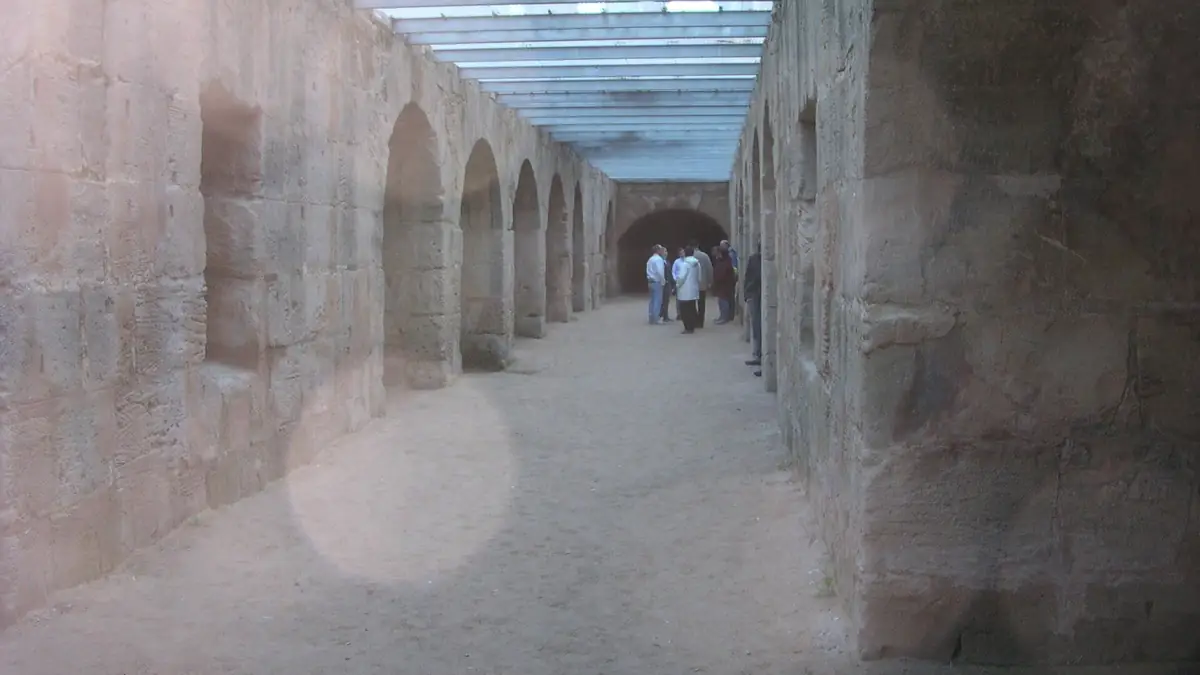
The Colosseum hypogeum is the two-level maze of tunnels, cages and machinery that once sat beneath the arena floor, and it’s the open, wall-lined pit you now see where the sand used to be. It wasn’t in the first design. Domitian ordered it built, and it turned the building into a stage with a basement.
At a glance: arena 83 × 48 m · 2 underground levels · 80 vertical shafts · 90 minutes inside with the underground ticket
“capable of presenting surprisingly complex stage machinery, as well as services for spectators.” Parco archeologico del Colosseo
What is the Colosseum hypogeum?
It’s a two-level subterranean network of tunnels and cages under the arena, where gladiators and animals waited before contests. The word is Latin for “underground”.
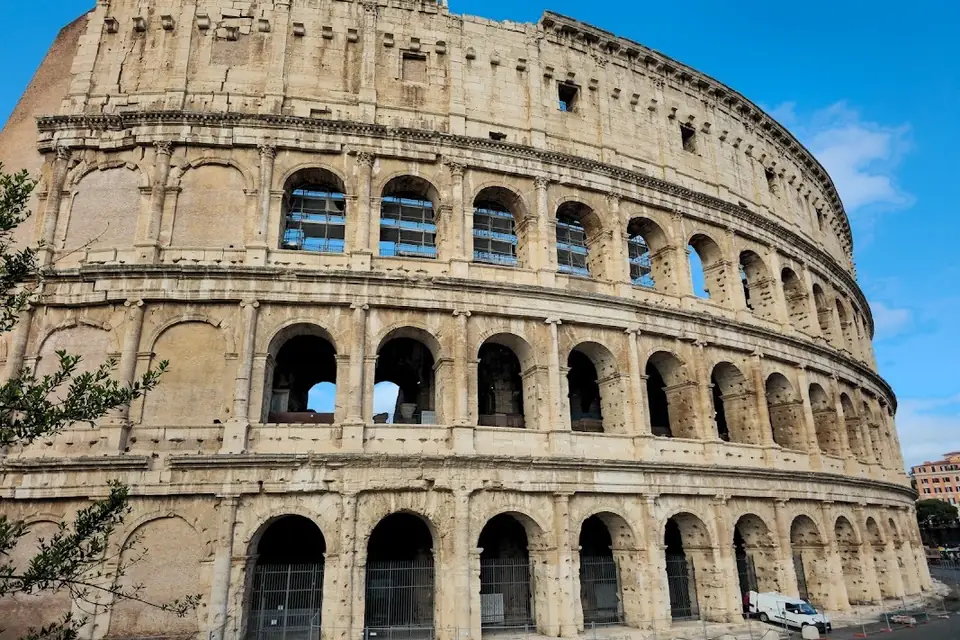
Think backstage, not dungeon. The Park itself calls the Colosseum the largest amphitheatre in the world, and this was the engine room that made its shows possible.
Why does the Colosseum have no floor?
The arena was a wooden floor covered in sand (Latin harena, hence “arena”), and little of it survives. What you see now is the hypogeum exposed, its walls filled in early on once the building stopped being flooded.
Whether it ever was flooded is argued. Ancient accounts say yes; there’s no physical evidence of naval shows at the Colosseum. I’d treat the water story as maybe. For the floor itself, see the arena page.
How did the lifts and trapdoors work?
Eighty vertical shafts let caged animals and hidden scenery reach the arena almost instantly, and larger hinged platforms called hegmata handled things like elephants. Elevators and pulleys did the lifting.
Be careful with the big numbers floating around online, the “60 capstans” kind. I couldn’t verify them, so I’m not repeating them. The Park’s night tour does stop at “the hoists and lifts”, which tells you how central they were.
Where were the animals and gladiators kept?
In the cages and chambers below, fed by tunnels from outside. Animals and performers came in from nearby stables, and the Ludus Magnus gladiator barracks to the east was linked underground too.
The emperor and the Vestal Virgins got their own tunnels so they never met the crowd. The Park’s route also names the Fosso Labicano and eastern and western manoeuvring chambers, the working corridors. Sibling topic, what’s inside the Colosseum, maps the other levels.
When was the hypogeum built and uncovered?
Domitian’s addition came after the opening, and it was restructured so often that at least twelve construction phases show. Gladiatorial games were abolished in 438, and after that came centuries of decline, quarrying and reuse.
Digging it out was slow: partly excavated in 1810 to 1814 and 1874, fully exposed in the 1930s. For the wider story, how the Colosseum was built covers the rest.
Can you visit the Colosseum hypogeum today?
Yes, but not on the standard ticket. That one covers the first and second order without the arena, so you need an underground ticket or a guided tour.
| Way in | Time inside | Books open | Notes |
|---|---|---|---|
| Full Experience Underground and Arena | 90 min | 30 days ahead | €24.00 in the night-tour fare breakdown; underground “based on availability”; last access 4.40 pm |
| A Night at the Colosseum | about 60 min | 7 days ahead | €50.00 full price; summer evenings only |
| Guide-led underground visit | Not stated | Guide books by phone | Maximum 7 people (6 plus the guide), on an experimental basis |
Say you hold a 3 pm slot on the underground ticket. Ninety minutes is the clock, so go down first, take the arena views after, and keep the Forum for tomorrow, since the ticket runs two consecutive days.
If you’d rather have a guide, an authorised reseller lists a Colosseum arena floor or underground tour from $86, about 2 hours. Full access rules are in the Colosseum underground tour guide.
Map, starting points: Colosseo metro (Line B) · Colosseo-Fori Imperiali (Line C) · Piazza del Colosseo
Frequently asked questions
Does a standard Colosseum ticket include the hypogeum?
No, the standard Colosseum, Roman Forum and Palatine ticket covers the first and second order without the arena. The underground comes with the Full Experience ticket, based on availability.
Was the Colosseum really flooded for naval battles?
Ancient accounts say the arena could be flooded quickly, but the Colosseum remains show no physical evidence of it. Historians still argue about it.
How many people can join a guided underground tour?
A guide may take a maximum of 7 people per tour, 6 plus the guide. The Park describes the limit as experimental, so check it before you book.
Did the hypogeum connect to the gladiator barracks?
Yes, tunnels linked it to the Ludus Magnus to the east. Animals and performers were also brought in by tunnel from nearby stables.
More Colosseum architecture: Colosseum Architecture hub · the arena · what’s inside · Colosseum night tour