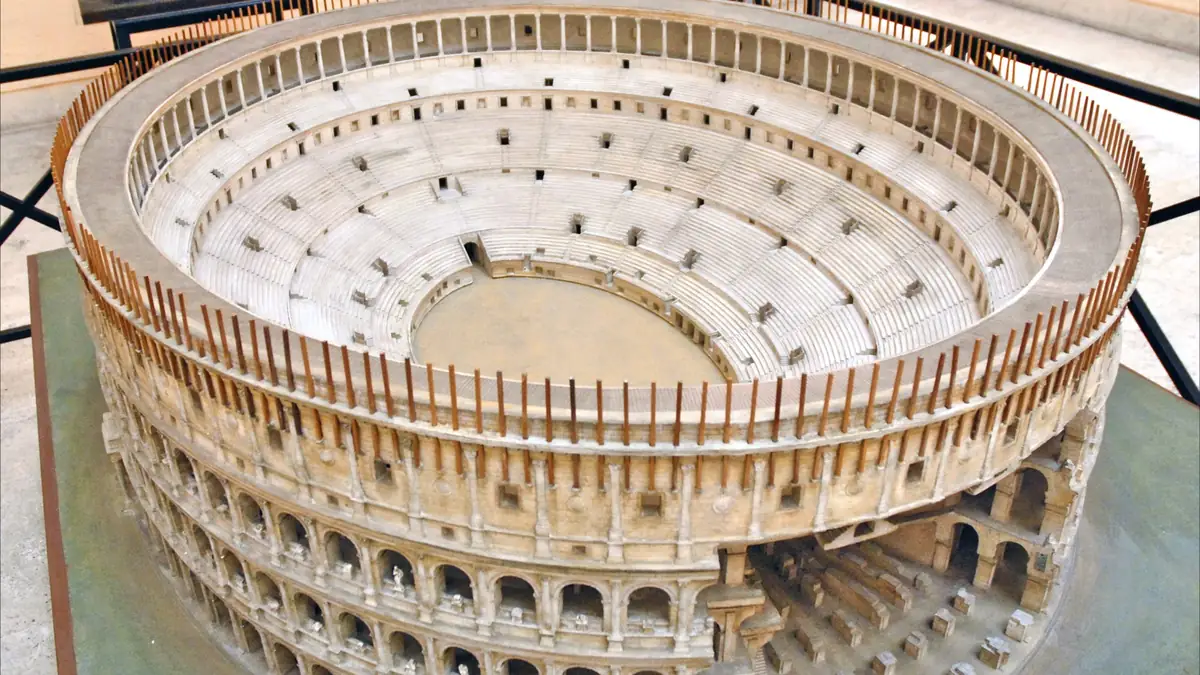
Asked did the Roman Colosseum have a roof, the honest answer is: a retractable one. It was a canvas awning called the velarium, strung over the seats on 240 mast corbels around the top of the attic, and it was never a solid cover like a modern stadium lid.
At a glance: 240 mast corbels · stone posts 18 m from the wall · groups of 25 on the attic visit · 90-minute stay
“remains possible only by climbing steep steps” Parco archeologico del Colosseo, on the attic visit
Did the Roman Colosseum have a roof?
Yes, but only a fabric one. The velarium was a retractable awning that kept sun and rain off spectators, and the arena was open to the sky.
Nothing was fixed. It went up for the games and came down after, which is exactly why nothing of it survives, and why you’ll find modern writers arguing about the details.
What was the velarium?
It was a canvas-covered, net-like structure of ropes, with a hole in the center. The Latin word means “curtain”, from the same root as velum, a sail.
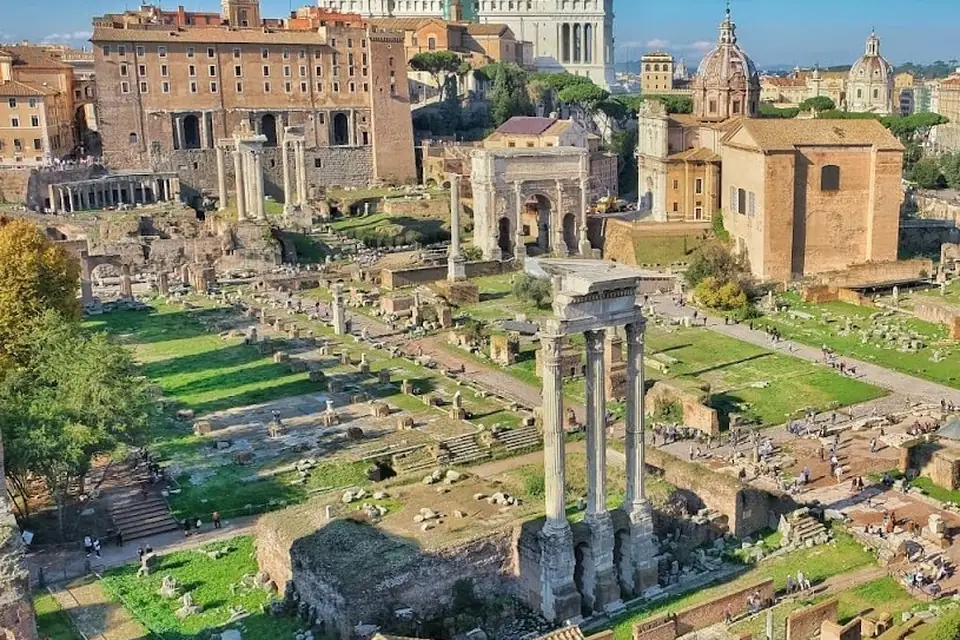
Awnings like this were relatively common across the Roman Empire. Pompeii has graffiti announcing the next games “will have awnings” (vela erunt). The Colosseum’s was simply the biggest.
How did the velarium work?
Ropes ran from the 240 mast corbels at the top of the attic to the canvas, which sloped down toward the center to catch the wind and cool the crowd. A corbel is a stone bracket, and the masts slotted into them.
How much it covered depends on who you read. The Colosseum article says two-thirds of the arena, the Velarium article says up to one third, and that article admits the precise details are unclear. I’d distrust any page quoting one number with total confidence.
| Detail | What the source says |
|---|---|
| Mast corbels | 240, around the top of the attic |
| Structure | Canvas over a net of ropes, hole in the center |
| Coverage | Two-thirds of the arena vs up to one third |
| Crew | Sailors from Misenum |
| Outer posts | Stone posts 18 m out, five left on the east side |
| Attic visit | Steep steps only; groups of 25 every 30 minutes from 9 November 2026 |
Who raised the velarium?
Sailors, by most accounts: the Colosseum article says they were enlisted from the naval headquarters at Misenum and housed in the Castra Misenatium. Wikipedia itself tags that line as of doubtful reliability.
The Velarium article is softer: it’s believed they were used for their sailmaking and rigging skills.
That logic is sound, honestly. Who else handles huge cloth and rope in wind? Treat the exact headcount you see online (1,000 comes up a lot) as folklore, since I found no source for it.
Is there any trace of the velarium today?
Not the cloth, only stone: the corbels, and a ring of tall stone posts 18 m from the perimeter, five of them still standing on the eastern side. Their job is argued over: a religious boundary, a ticket-check line, or an anchor for the awning.
Be careful with the word “roof” when you’re on site. The building is the largest amphitheatre in the world, and today it has none.
Can you see where it attached from the attic?
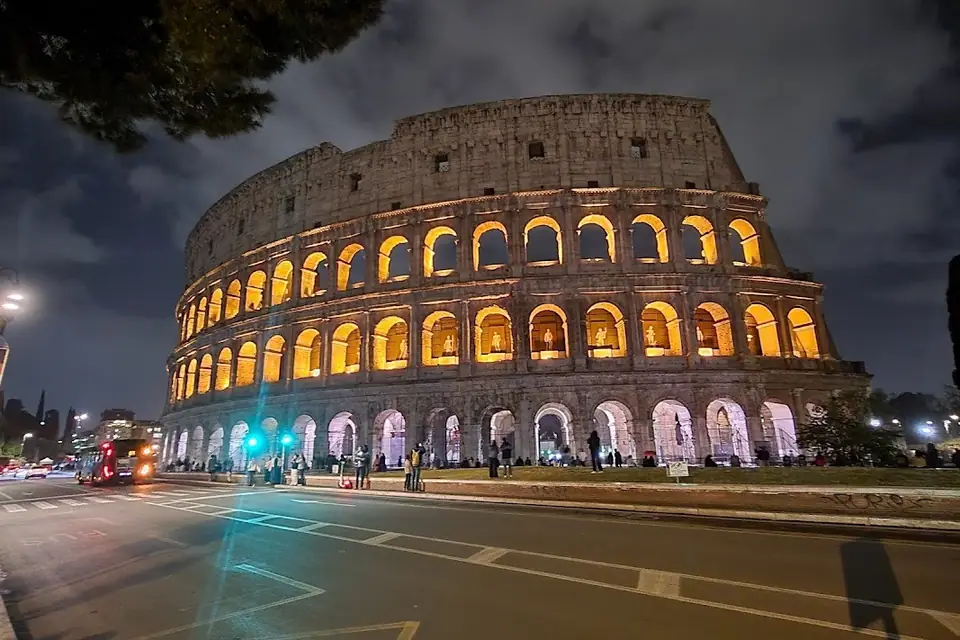
The corbels sat at the top of the attic, so that’s the level to ask about. The Park’s Full Experience Attic ticket covers it, in groups of 25 admitted every 30 minutes, and the climb is steps only (a lift is reserved for documented mobility problems).
Say you want the upper levels and you land in Rome on a Friday. Tickets open 30 days ahead, the slot is timed, and you’re told to report 30 minutes after the time printed on it, late arrivals refused. Sort it out at home. More on the level itself in our colosseum attic guide; to see how it all fits, read every level explained and the Colosseum dimensions.
Map, starting points: Colosseo metro (Line B) · Piazza del Colosseo · Arch of Constantine
Frequently asked questions
Did the velarium cover the whole Colosseum?
Probably not. The two Wikipedia articles give two-thirds and one third, and the second admits the details are unclear.
Did the velarium keep out rain?
It was meant to: the Colosseum article says it kept the sun and rain off spectators. How well a rope-and-canvas awning handled a real downpour isn’t recorded in the sources I opened.
Is the Colosseum hot with no roof today?
Yes, in summer. Our calculation from Open-Meteo data gives average highs of 30.4°C in July and 30.7°C in August, while November averages 131 mm of rain over 12 rainy days.
How do I book the attic visit?
Buy it on the Park’s own Full Experience Attic page, up to 30 days ahead. The stay in the Colosseum is 90 minutes and the ticket is valid for two consecutive days.
More on the building: Colosseum architecture · how the Colosseum was built · what it looked like originally