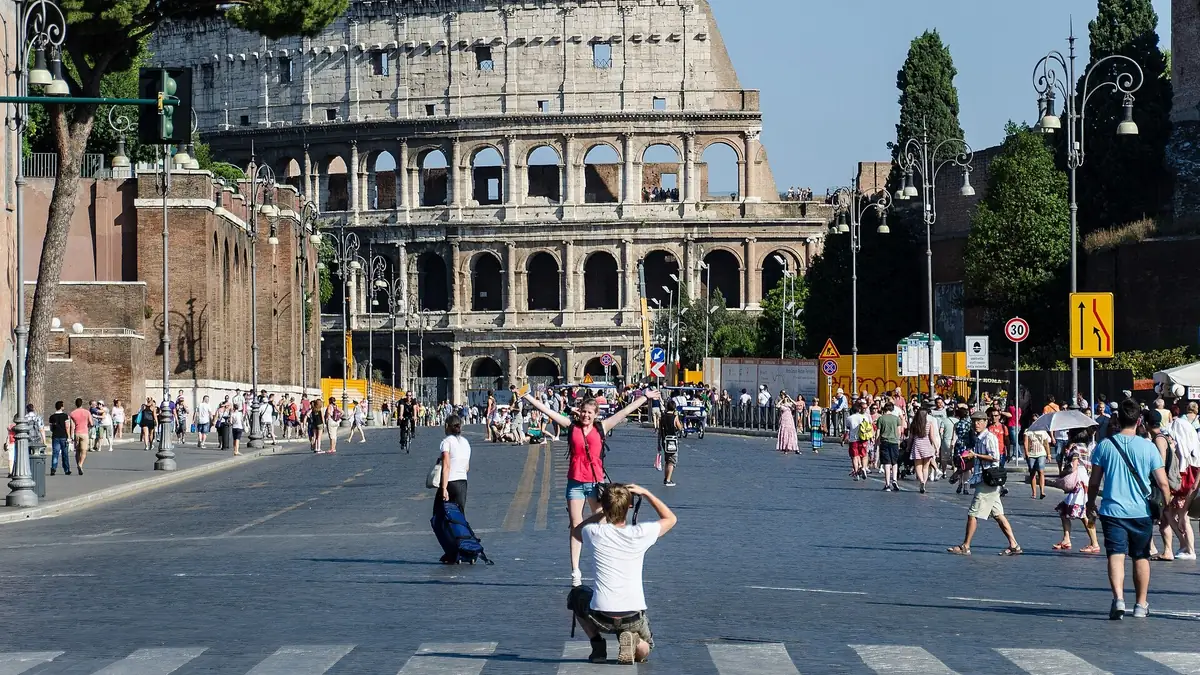
Inside Colosseum you get an arena floor, tiers of seating, a brick maze of underground passages, and, higher up, a gallery and an attic that most visitors never reach. What you actually see depends on the ticket, because the standard ticket stops at the first and second levels, without the arena.
Key figures: arena 83 × 48 m · 90 minutes inside · attic groups of 25 · opens 8.30 am
What is inside the Colosseum?
Inside you find the arena, the seating tiers, the underground passages, an intermediate gallery and the attic. The Park treats them as separate visits: first and second levels, arena, underground, attic.
Much has gone. Little of the original arena floor remains. What’s left is stone, brick and scale, which is plenty.
What can you see on the first and second levels?
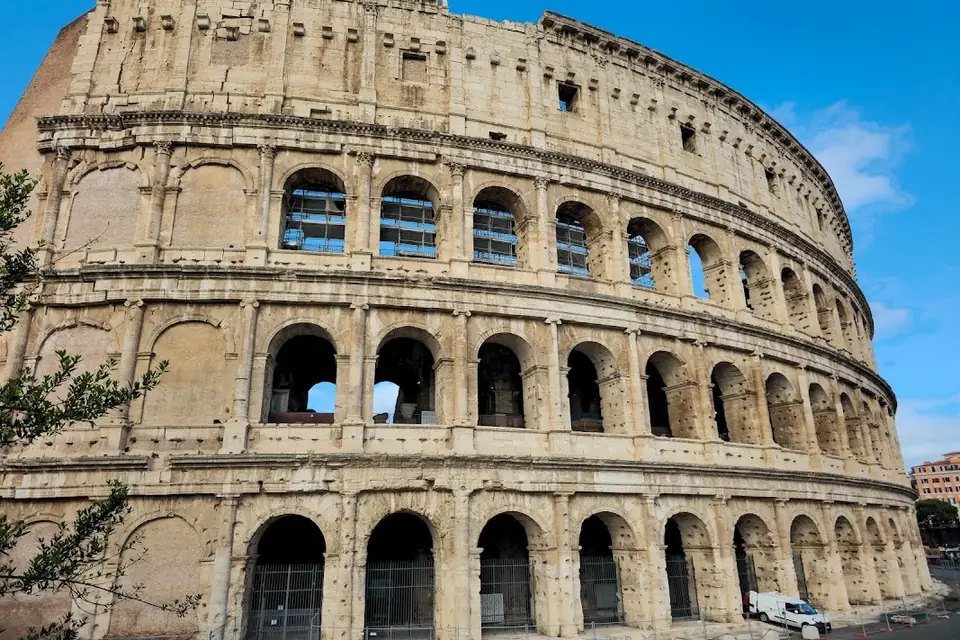
The first and second levels are the ordinary route: seating tiers, passages and views over the arena. The second level also holds the Colosseum Museum, and the ticket adds panoramic terraces.
The museum is small and I’d still not skip it. It shows capitals, fragments of barriers and a model, so the ruin starts to make sense. There are bookshops on the first and second tiers, which answers the gift shop question.
Is the arena floor still there?
The arena was 83 by 48 metres, a wooden floor covered in sand, and today you look down into the exposed hypogeum below. To stand on a floor, you need an arena ticket, and Only Arena gives 20 minutes.
The underground is the part people rave about, and it’s subject to availability even with the right ticket. More on how it worked: Colosseum hypogeum and the arena.
What is the Colosseum attic and who can visit it?
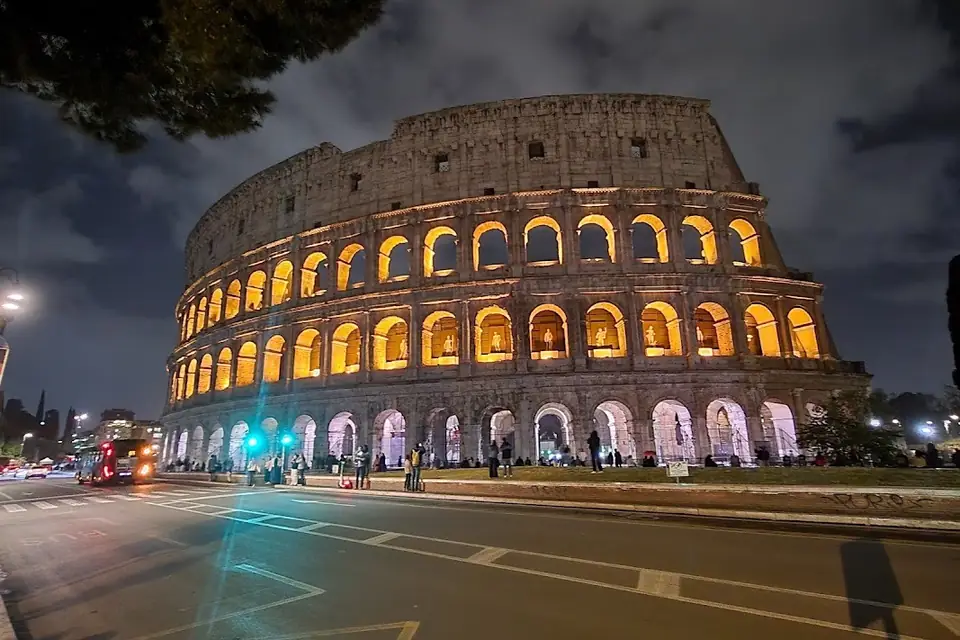
The attic sits above the third level, and the Park opens it through the Full Experience Attic ticket. It is steep steps only, with groups of 25 every 30 minutes.
“The intermediate gallery can be walked through its entire length” — Parco archeologico del Colosseo
The panoramic lift is reserved for visitors with documented difficulty climbing stairs. Honestly, if you like seeing the bones of a building rather than the postcard, this is the ticket. Late arrival means no entry.
Which ticket opens which level?
Each ticket opens a different slice, and the arena, underground and attic are never in the cheapest one. The comparison below uses the Park’s own pages.
| Ticket | Price | Levels and areas |
|---|---|---|
| Colosseum, Roman Forum and Palatine | €18 | First and second level, museum; no arena |
| Only Arena | €18 | Arena floor, 20 minutes |
| Full Experience Arena | €24 | First and second level, arena, museum |
| Full Experience Underground and Arena | €24 | Arena, underground (subject to availability), museum |
| Full Experience Attic | €24 | First, second and third level, intermediate gallery, attic |
Figures from the Park’s pages for the standard ticket, Only Arena, Full Experience Arena, Underground and Arena and Attic. Choosing between them: which Colosseum tickets to buy.
Say you reach the gate at 9:20 with two kids and the standard ticket. You’ll walk both tiers and the museum, then watch the arena from above. Fine, but the floor and the tunnels stay out of reach. Tickets are in the holder’s name, sold 30 days ahead, so that’s a decision for home, not the gate.
If the underground is what you want and slots are gone, an authorised reseller sells an All-Access Colosseum Underground and Ancient Rome tour, 3 hours, from $131.
Map, starting points: Colosseo metro (Line B) · Colosseo-Fori Imperiali (Line C) · Piazza del Colosseo
Frequently asked questions
How long can you stay inside the Colosseum?
Time is capped: 90 minutes on the underground and attic tickets. The Park says visits last 75 to 90 minutes depending on the ticket.
Can I enter at a different time than the one I booked?
No, the Park says entering at a different time is not possible. So pick your slot carefully, because I wouldn’t count on any flexibility at the gate.
Is there an audio guide inside?
Yes. The free MyColosseum app has audio guides in Italian and English for iOS and Android.
Was the arena ever flooded for sea battles?
Ancient accounts say so, but there is no physical evidence at the Colosseum. Building the hypogeum under Domitian ended any flooding early on.
More on the building: Colosseum architecture · Colosseum map · Colosseum night tour