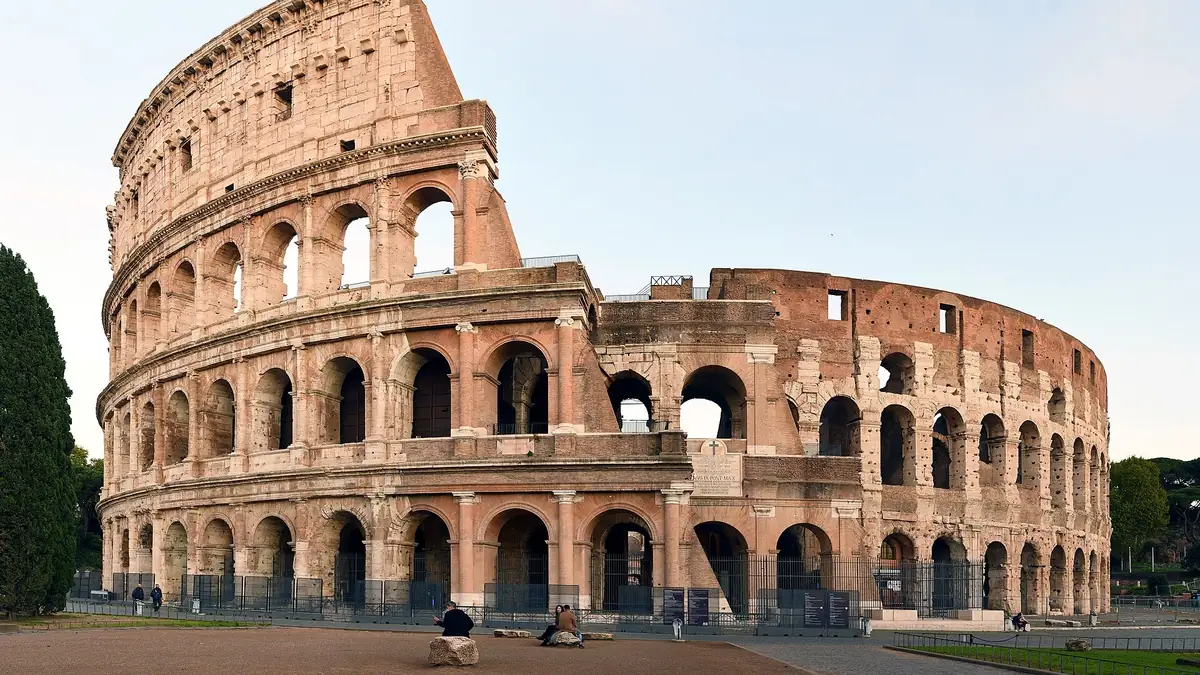
Why was the Colosseum built? Vespasian began it around 70–72 AD, after a civil war, to give Rome a giant public arena where an emperor’s private lake had been. It was paid for with spoils from Jerusalem, and it was never just a ball park for blood.
Key figures: begun c. 70–72 AD · top level finished 80 AD · 50,000–80,000 spectators · 80 ground-level entrances
“The building was, and still remains today, a spectacle in itself.” Parco archeologico del Colosseo
Why was the Colosseum built?
Vespasian started it to win public goodwill after civil war and to turn Nero’s private land into a place for the people. Jerusalem spoils paid for it, and its job was to stage animal hunts and gladiatorial games.
The official park says it was built in the 1st century CE at the behest of the Flavian emperors. The motive is where it gets interesting, and I’d call it politics first, entertainment second. Honestly the games were the delivery system.
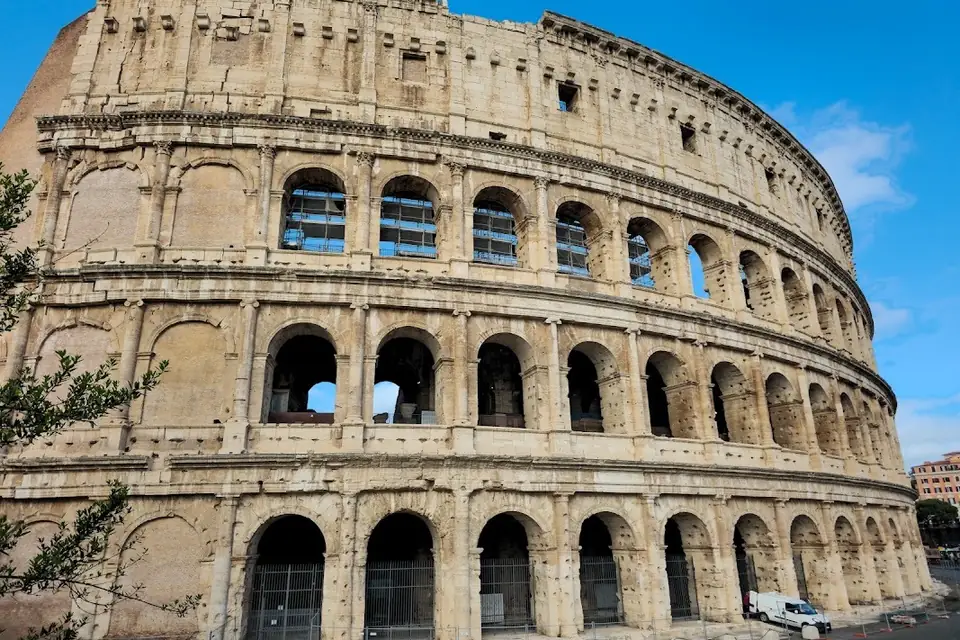
| Motive | What the record shows | Source |
|---|---|---|
| Legitimacy | Vespasian emerged from the civil war of 69 and helped rebuild Rome | Vespasian |
| Replacing Nero | Nero’s palace lake lay where the Colosseum stands | Domus Aurea |
| Money | Spoils of the Jewish Temple after the 70 AD siege | Colosseum |
| Spectacle | Animal hunts and gladiatorial games | Colosseum |
Why did Vespasian need to win Rome over?
Rome had just survived a year of civil war, the Year of the Four Emperors, and Vespasian came out of it as founder of the Flavian dynasty. He helped rebuild Rome afterwards, and the Colosseum was one of his projects.
No ancient source I’ve opened states a “political motive” in so many words. It’s an inference from the timing, and a good one, but treat it as reading rather than record.
Why was the Colosseum built on Nero’s lake?
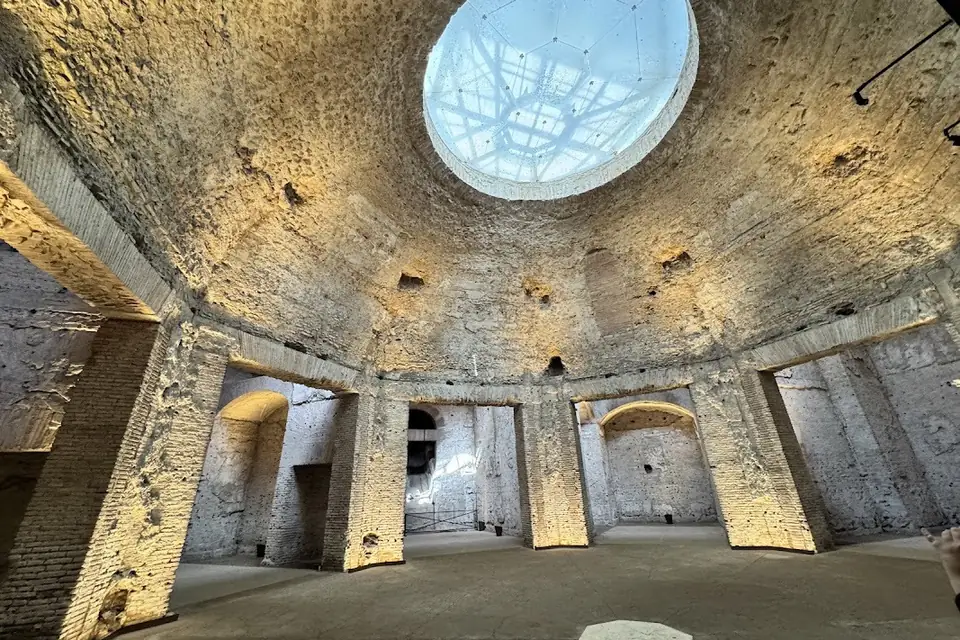
After the Great Fire of 64 AD, Nero seized much of the area and built the Domus Aurea. Its artificial lake lay in the valley where the Colosseum stands today.
Putting the amphitheatre there swapped one man’s pleasure ground for a building the park describes as open to the Roman community. My reading, again. Nearby stood Nero’s bronze Colossus, reported at 35.5 m tall, and a statue like that is the likely source of the arena’s nickname. More on that in why it is called the Colosseum.
Who paid for the Colosseum?
Spoils taken from the Jewish Temple after the siege of Jerusalem in 70 AD funded construction. A reconstructed inscription says Vespasian ordered the amphitheatre built from his general’s share of the booty.
That’s about the best “receipt” any Roman building has. Who actually swung the tools is a separate story: who built the Colosseum.
What did Romans get once it opened?
Spectacles of great popular appeal: animal hunts and gladiatorial games, run until the end of the ancient period. At the inaugural games, Dio Cassius says over 9,000 wild animals were killed.
Titus finished the top level in 80, and Domitian added the underground tunnels and an extra gallery for more seats. Eighty entrances, 76 of them for ordinary spectators, emptied a crowd fast. Full detail sits on what the Colosseum was used for.
How does knowing why it was built change a visit?
It turns a ruin into an argument. Stand where the lake was, and the building reads as a deliberate answer to Nero, not just a big stadium.
Say you step off Metro Line B at Colosseo with an hour to spare before your slot. Stand in the piazza and picture water, not stone. Then head for the Palatine, where, per the park, the main nuclei of Nero’s palace stood, on the same day. One 24-hour Colosseum, Forum and Palatine ticket covers both.
If you’d rather have it explained on site, an authorised reseller lists a 2.5-hour guided tour of the Colosseum, Roman Forum and Palatine Hill from $53, and our own page walks through the Colosseum, Roman Forum and Palatine Hill tour option by option.
Map, starting points: Colosseo metro (Line B) · Piazza del Colosseo · Domus Aurea, Colle Oppio
Frequently asked questions
Was the Colosseum built by slaves?
Often assumed, not proven: slaves and prisoners of war probably contributed to the workforce. Professional builders, engineers and decorators handled the skilled work.
How many people could the Colosseum hold?
Modern estimates run from 50,000 to 80,000, with an average audience of about 65,000. An ancient calendar claims 87,000, though modern estimates sit well below that.
When did the Colosseum stop being used for games?
The park dates the slow decline to 438, when Valentinian III abolished the gladiatorial games. Later it became a quarry, housing and workshops.
Is the Colosseum named after Nero’s statue?
Yes, per the park, it became known as the Colosseum because of a colossal statue that stood nearby. Its real name is the Flavian Amphitheatre.
More history: Colosseum history and facts · who built the Colosseum · what it was used for · why it is called the Colosseum · home