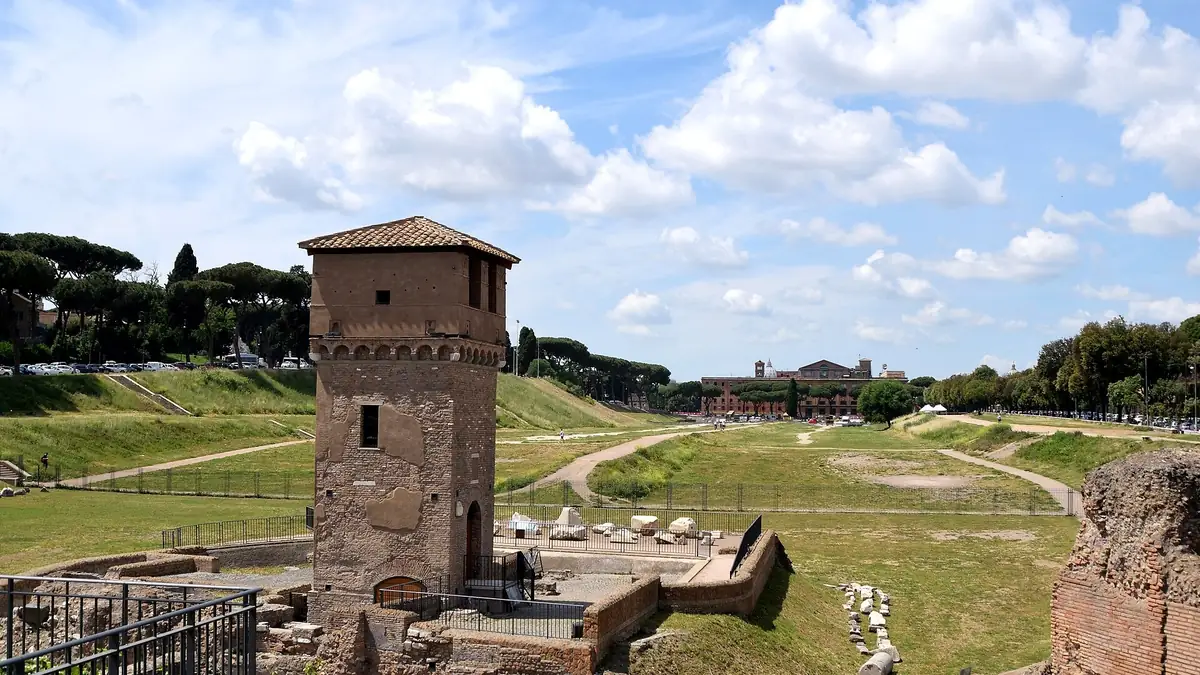
The Circus Maximus was ancient Rome’s great chariot racetrack, and today it’s a long grassy park in the valley between the Palatine and Aventine hills. It’s free to walk, there’s very little standing stone, and that’s exactly why people get it wrong.
Key figures: 600 m long · 140 m wide · over 150,000 spectators (modern estimate) · surveys completed 2016
“The largest building for public entertainment in antiquity.” Turismo Roma
What is the Circus Maximus?
It’s the oldest and biggest racing venue of ancient Rome, set in the valley between the Palatine and Aventine hills. The city’s tourism board calls it the largest building for public entertainment in antiquity, 600 metres by 140.
Races were run there in the days of the Tarquin kings, but only under Julius Caesar was a proper walled circus built. Fire kept wrecking it. Trajan rebuilt it almost completely, and most of what survives is his.
What was the Circus Maximus used for?
Chariot races, mostly, plus processions, triumphal celebrations and public executions. Teams ran in green, blue, red and white, and fans sat by colour.
Drivers were idols. Think football ultras with a stadium roughly six hundred metres long. Gladiator shows were a different story: by the late 1st century AD the Colosseum had been built for most of the city’s gladiator fights, so the two buildings split the work.
| Phase | What happened |
|---|---|
| Tarquin kings | Races held in the valley, no walled circus yet |
| Julius Caesar | First real walled circus built |
| Trajan | Almost completely rebuilt after fires |
| To early 6th century | Still in use |
| 19th century | Gasworks, warehouses and homes on the site |
| 2016 | Archaeological surveys completed |
Figures from Turismo Roma.
What is left of the Circus Maximus today?
Not much above ground. The track is a grassy oval, and the original surface lies about six metres below the modern ground.
One corner is excavated. There you can see galleries that led to the seating, ancient paving stones and rooms that were shops, inns and offices, and the 12th-century Torre della Moletta, whose upper floor gives a view that makes the scale click. Honestly it’s the best bit.
Can you visit the Circus Maximus, and is it free?
Yes to both for the park: the city lists the site as always open. The excavated area and tower are a different matter, a booked entry, Tuesday to Sunday, 9.30 to 16.00 in winter and 9.30 to 19.00 from the last Sunday of March.
Booking is online or by phoning 060608. The augmented and virtual reality tour lasts about 40 minutes in six languages. The page I read states no price, so check before you go.
Is the Circus Maximus the same as the Colosseum?
No. The Circus Maximus was a long racetrack for chariots; the Colosseum was the amphitheatre that took most of the city’s gladiator fights.
Say you’re at the Colosseum at 9:20 with two kids who’ve had enough stone. I’d walk toward the Circus Maximus afterward, because it’s open grass where they can run and you can still say “that’s where the races were”. Check the walk on a map, I haven’t found an official distance. Start from the Colosseo metro stop and see the Palatine from above, since the Circus sits in the valley below it.
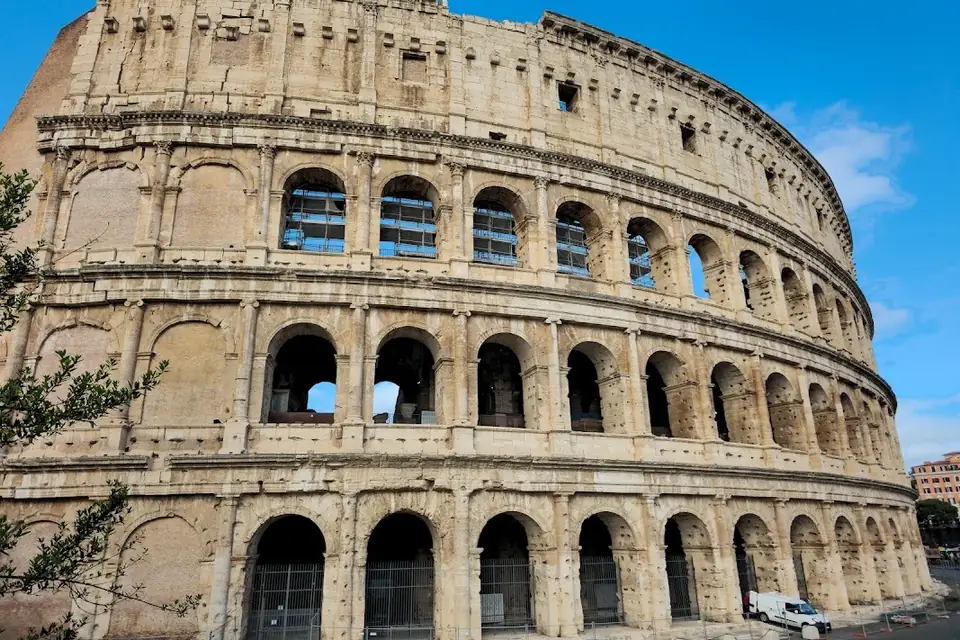
Map, starting points: Circus Maximus · Colosseo metro (Line B) · Palatine Hill
Frequently asked questions
Why did they stop using the Circus Maximus?
The city says it was used until the first decades of the 6th century. After that it became farmland, then in the 19th century a zone of gasworks and warehouses.
Who built the Circus Maximus?
Nobody built it in one go. Races date to the Tarquin kings, Julius Caesar gave it walls, and Trajan rebuilt most of what survives.
Did gladiators fight at the Circus Maximus?
The tourism board says the races were popular as well as the gladiatorial games, so the crowd loved both. From the late 1st century AD, though, the Colosseum took most of the city’s gladiator shows.
Is the Circus Maximus worth seeing?
I’d say yes, briefly, if you’ve already done the Colosseum and want the other half of the Roman entertainment story. Don’t expect a second Colosseum, or you’ll be let down.
More Forum and Palatine planning: Roman Forum and Palatine Hill · Palatine Hill vs Roman Forum · Colosseum night walking tour · home